Blog
Business Phone System
How to Get a US Toll-Free Number for Your Business

How to Get a US Toll-Free Number for Your Business
Discover how to get your US toll-free number the easy and affordable way.



If you’re looking to give your customers a free and centralized way to contact your business across the US and Canada, a US toll-free number is the perfect solution.
While large organizations have relied on toll-free numbers for decades, small businesses and startups have only recently started recognizing their potential. That’s understandable, because traditionally, setting up a toll-free number was expensive, and paying for every inbound minute could quickly add up.
Fortunately, things have changed. Today, you can get a toll-free number easily and affordably through a virtual business phone system, without the high setup costs or complicated contracts.
In this guide, we’ll walk you through how to get your US toll-free number step by step, without breaking the bank.
What is a US Toll-Free Number?
A US toll-free number is a special type of business phone number that includes one of the toll-free prefixes such as 800 or 888. These numbers allow customers across the US and Canada to call your business without being charged for the call. Instead, the business that owns the number covers the call costs.
US toll-free numbers can be dialed from any US phone, whether landline or mobile, and are commonly used by businesses to project a nationwide presence and provide easy access to customer support or sales lines.
US Toll-Free Number Format
All toll-free numbers in the US follow the country code +1 and one of the recognized toll-free prefixes. Each prefix works the same way; the only differences are their appearance and availability when choosing a new number.
Example of a US toll-free number: +1 (800) 123-4567
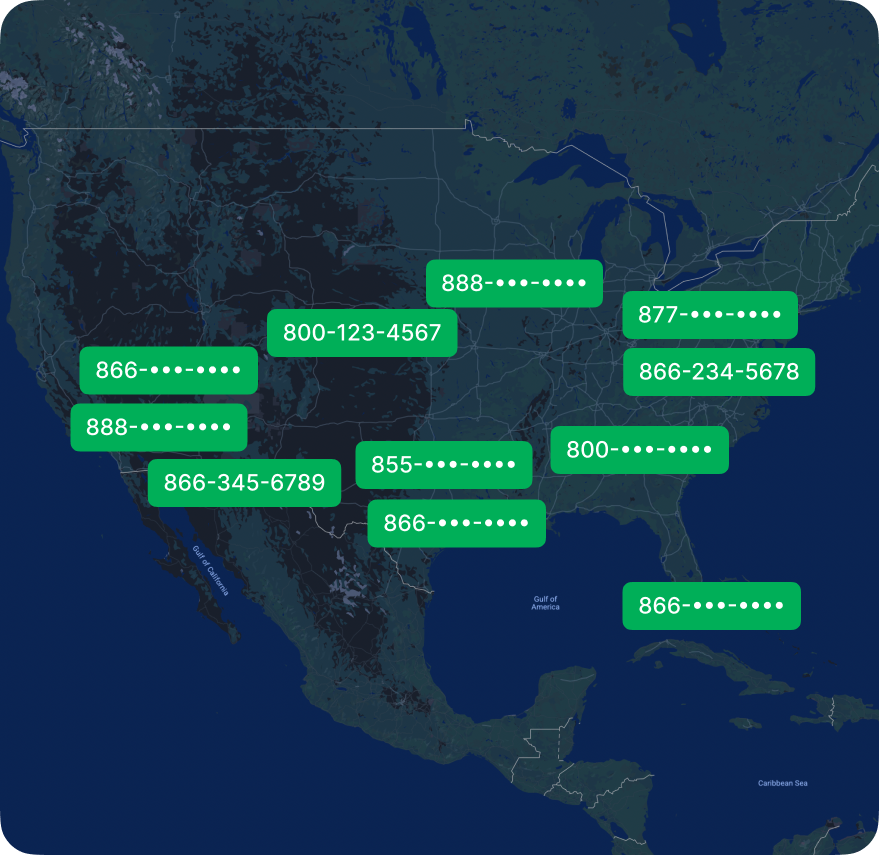
US & Canada Toll-Free Number Prefixes: A Quick Timeline
- 1967 – 800 introduced by AT&T, marking the start of toll-free calling.
- 1996 – 888 added to meet growing business demand.
- 1998 – 877 released as toll-free services expanded.
- 2000 – 866 launched to accommodate early-2000s growth.
- 2010 – 855 introduced as cloud phone systems gained traction.
- 2013 – 844 added to support nationwide toll-free usage.
- 2017 – 833 became the newest prefix, ensuring continued availability.
US Toll-Free vs. US Local Number
As a business, you can use both toll-free and local numbers to reach your customers, but they work in different ways.
1) A local phone number is tied to a specific area code, which reflects your business’s geographic location. For example, (212) 555-7890 signals a presence in New York, while (415) 555-2345 points to San Francisco.
A toll-free number, on the other hand, isn’t tied to any city or state. Numbers like (800) 123-4567 or (888) 987-6543 are recognized nationwide and suggest that your company serves customers across the country, which can make your brand appear larger.
2) When someone dials a local number, the caller may incur charges depending on their phone plan or location. With a toll-free number, the call is always free for the caller because your business covers the cost.
How to Get or Buy a US Toll-Free Number
In the United States, toll-free numbers are regulated by the Federal Communications Commission (FCC). While the FCC oversees the process, it does not sell numbers directly to businesses. Instead, toll-free numbers are issued and managed through “Responsible Organizations” (RespOrgs). RespOrgs are FCC-certified companies that reserve, manage, and transfer toll-free numbers within the official SMS/800 database.
Toll-free numbers are assigned on a first-come, first-served basis. RespOrgs act as intermediaries between the database and the business owner, ensuring your number is properly registered and routed.
Many well-known providers, from traditional landline carriers like AT&T to mobile providers like Verizon, and VoIP business phone system providers, operate as RespOrgs.
Depending on your needs, you can get a US toll-free number in two main ways:
- Through a traditional telecom provider: You’ll receive a working toll-free number, but typically without advanced call management features. This option may suit businesses that only need a basic phone line.
- Through a VoIP business phone system provider: Modern VoIP providers (like DialLink) not only help you obtain and activate a toll-free number but also include a full suite of communication features, such as call management and business messaging. This option is ideal for businesses that want more than just a phone number.
The second option doesn’t just give you advanced features. It also makes the process much easier for your business.
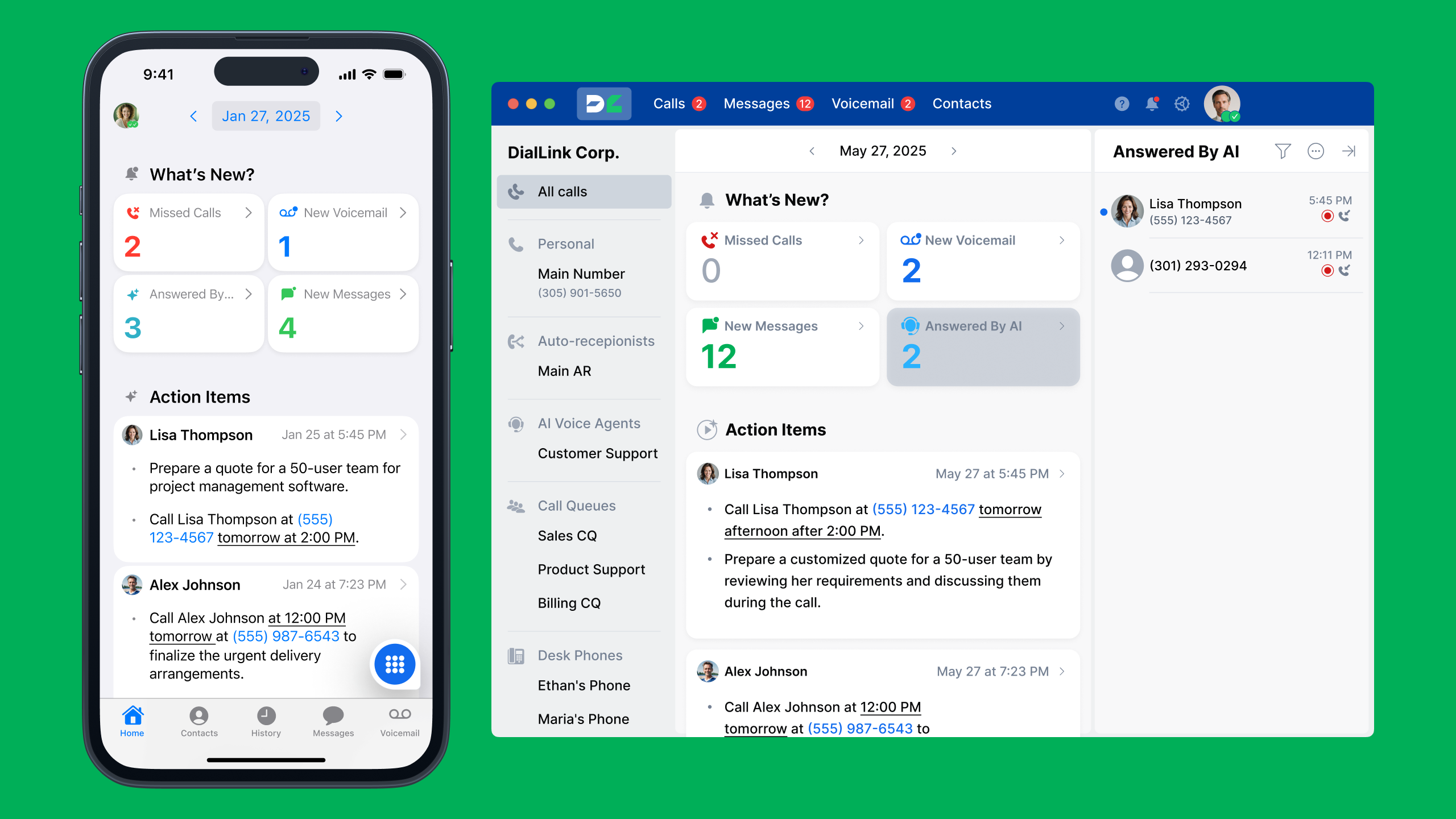
With DialLink’s business phone system, you can get your toll-free number for the US in just three simple steps:
- Sign up for a DialLink account using your email address, Google, or Microsoft account to start a 7-day free trial.
- After signing up, you’ll automatically receive a free local phone number. To add a toll-free number, click “Add new phone number” and choose one from the list of available toll-free options.
- Enter your service address for the selected number to complete the setup.
That’s it! Your new toll-free number will appear in your account, and you can start using it right away for business calls.
CHOOSE_PHONE_NUMBER
Cost of a US Toll-Free Number
The total cost of owning a US toll-free number depends on how you obtain it: via a traditional telecom carrier or via a virtual/VoIP phone system. Below are the typical cost components and example pricing for each route.
Typical cost components include:
- Setup or activation fee: Some providers charge a one-time fee when issuing a toll-free number.
- Monthly line fee: A recurring cost to keep the number active.
- Usage charges (per-call or per-minute fees): Since the business pays for inbound calls, you often pay per minute for each call received.
Example: Traditional Telecom Provider (AT&T)
Let’s estimate the approximate cost of obtaining and using a US toll-free number through a traditional telecom provider such as AT&T. Please note that the following figures are estimates*.** Actual costs may vary depending on your business plan, usage, and location.*
- Activation fee: A one-time setup fee of up to $35 may apply when opening a new service account.
- Associated line requirement: Each toll-free number must be linked to an active business phone line. A standard business line from AT&T generally costs around $30 per month, though bundle or promotional pricing can reduce this amount.
- Monthly number fee: Toll-free numbers typically carry a recurring monthly charge of around $6.
- Call usage rate: Typical domestic interstate rates range between $0.019 and $0.037 per minute, billed to the business receiving the call.
So, for a small business receiving a few hundred toll-free minutes per month, the total monthly cost would be around $40, plus a one-time activation fee of about $35 for setting up the account.
Example: VoIP Provider (DialLink)
VoIP business phone system providers typically offer simpler and more transparent pricing for toll-free numbers. Here’s an example based on DialLink’s business phone system:
- Account plan: You can get started with a base plan starting at $15 per month, which includes access to your toll-free number.
- Toll-free number add-on: $7 per month to add a toll-free number to your account.
- Call usage: With DialLink, toll-free minutes are included in your plan's monthly minute package, so incoming toll-free calls use the same minutes as your other calls instead of being charged at a separate toll-free rate.
In this case, your monthly cost would be about $22, which already includes some free minutes, often enough for smaller businesses just starting out.
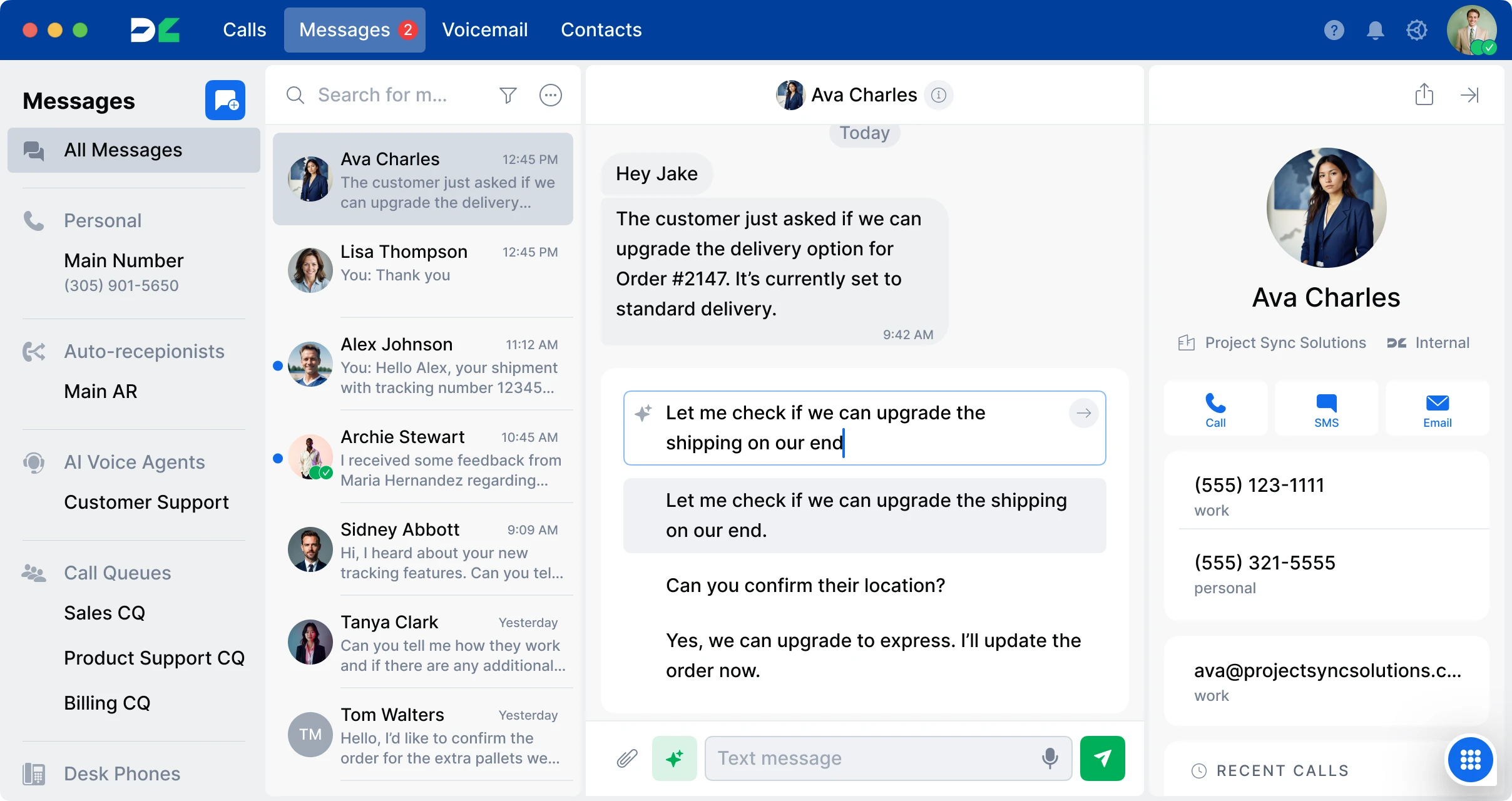
Text Messaging for Toll-Free US Number
Many US toll-free numbers can also send and receive SMS messages, but this depends on your provider. First, check whether your toll-free number supports texting. If it does, you can then enable SMS functionality through your provider.
Keep in mind that some carriers and regulations require a Toll-Free SMS verification process before you can start sending business messages. Completing this step helps ensure your messages are delivered reliably and stay compliant with carrier rules.
Once enabled, customers can text your business toll-free number just like any other phone number.
Choose DialLink to Get Your US Toll-Free Number
If you’re looking for an easy, fast, and affordable way to get a US toll-free number for your business, DialLink is the ideal solution.
With DialLink, your toll-free number is more than just a phone line. It’s part of a business phone system that helps you manage and distribute incoming calls efficiently. You can assign your number to features like:
- An auto-receptionist to greet callers professionally and route them to the right department.
- Phone menus to automatically guide callers through options and route them to the right person or department.
- Ring groups to have incoming calls ring multiple team members simultaneously, ensuring faster response times.
- Call queues to place callers in a virtual waiting line and even offer them a callback option, so they don’t have to stay on hold.
- AI voice agents to handle routine calls automatically, freeing your team to focus on more complex or high-value conversations.
- AI messaging agents to reply to customer texts instantly, if you've enabled text messaging on your toll-free number.
With DialLink, you don’t just get a number. You get a complete communication platform designed to make your business sound professional, responsive, and always available.
To get a US toll-free number, you can go through either a traditional telecom provider (like AT&T or Verizon) or a VoIP business phone system provider (like DialLink).
With DialLink, you can get a US toll-free number in just a few minutes and connect it to advanced features like call routing, AI voice agents, and voicemail.
A US cellular toll-free number refers to toll-free numbers that mobile users across the US can call at no charge. Whether a customer calls from a landline or cell phone, the business that owns the toll-free number pays for the call, not the caller.
Featured Tags
Share


Arina Khoziainova
Content Writer at DialLink
Arina is a content writer with over 7 years of experience in the IT industry. At DialLink, she creates clear, insightful content that helps small business and startup owners simplify communication and drive growth using modern tools. With a strong focus on practical value, Arina transforms complex topics into accessible, actionable stories.

Keep Reading

Local Vanity Phone Numbers for Business: What They Are and How to Get One
Read about what a vanity local phone number is, how businesses use them, and how to get one for your company.
December 12, 2025
8 minutes

The Ultimate Guide to Local Phone Numbers for Business
Explore what local phone numbers are and how your business can easily get one.
December 09, 2025
6 minutes

Virtual Local Phone Numbers: Overview and Benefits
Explore everything you need to know about virtual local phone numbers to help you choose the right one for your business.
December 13, 2025
7 minutes

How to Get a Local Phone Number for Your Business
Learn how to check local phone number availability, choose the right one, and purchase it for your business with DialLink.
December 10, 2025
8 minutes

Overview of Google Voice Local Phone Numbers
Get an overview of Google Voice, including its features, pricing, value, and key limitations.
December 08, 2025
9 minutes
Number Porting Explained: Everything Your Business Must Know
Learn what number porting is, how it works, and how to prepare for it to ensure a smooth and hassle-free transition to your new phone provider.
November 24, 2025
11 minutes

What Is a VoIP Phone and How It Works: A Complete Guide
Explore what VoIP phones are, how they work, the different types available, and how to set them up.
November 18, 2025
11 minutes

What Is an International Phone Number and How to Get One?
Learn what an international phone number is, see examples from major cities worldwide, and discover why having one can be essential for your business.
October 23, 2025
13 minutes