Blog
Business Phone System
Number Porting Explained: Everything Your Business Must Know

Number Porting Explained: Everything Your Business Must Know
Learn what number porting is, how it works, and how to prepare for it to ensure a smooth and hassle-free transition to your new phone provider.



If you’re a startup owner or solopreneur using a separate number on your cell phone for business calls, you might want to move your number into a professional phone system. Or perhaps your company is switching from one phone system provider to another. Whatever the reason, changing your recognizable phone number can lead to lost customers and disrupt your daily operations.
Porting a phone number can help you prevent that disruption. It’s a process that lets you keep your existing number while switching providers, so you can upgrade your service without losing the trust and recognition your number has built over time.
In this blog, we’ll explore what number porting is, how it works, and how to prepare for the process so it goes as smoothly as possible.
What Is Number Porting?
Number porting, also known as phone number portability, is the process of transferring your existing phone number from one service provider to another while keeping the same number. In simple terms, it allows you to switch carriers or phone system providers without having to change your business contact number.
Both individuals and businesses have the right to keep their phone numbers when changing providers. If your account is in good standing and not tied to a contract, your current provider cannot refuse a legitimate port-out request. For instance, under FCC regulations in the U.S., service providers are required to allow number porting.
What Types of Phone Numbers Can You Port?
In most cases, all types of phone numbers can be ported, though the exact rules and procedures may vary depending on your country and service provider. Below are the main types of numbers that can typically be transferred:
- Landline (fixed or wireline) numbers: Traditional business and residential landline numbers can usually be transferred from one provider to another. For example, if your company wants to move its cable-based office phone number from a local telecom provider to a virtual or cloud phone system, you can do so without losing your existing number.
- Mobile (cellular) numbers: Most regions fully support mobile number portability, allowing you to change mobile carriers while keeping your existing number, whether it’s a personal or business line. Some countries offer a limited number of free ports per user, after which a small fee may apply.
- VoIP or virtual phone numbers: Virtual or VoIP numbers can also be ported between phone systems or providers. For example, if you’re moving from one cloud-based phone system to another, you can bring your virtual number with you to ensure uninterrupted communication with customers and clients.
- Toll-free numbers: Toll-free numbers (such as 1-800, 888, or 0800) are typically eligible for porting as well. This makes it easy for businesses to retain their well-known customer support or sales numbers when switching to a new phone system provider.
Keep in mind that while most number types can be ported, some exceptions may apply, such as premium-rate or region-restricted numbers. Always confirm eligibility with your existing and new provider before starting the porting process to avoid delays or service interruptions.
Why Do Businesses Port a Phone Number?
While individuals usually port their personal numbers to switch to a more affordable or reliable carrier, businesses often have broader reasons. Here are some real-world examples of when porting a phone number can be the best option for a company:
Startups and Solopreneurs Setting Up Their First Phone System
If you’re a solopreneur or startup owner who has been using a personal or mobile number for business calls, porting that number into a professional phone system lets you maintain the contact details your customers already know. It’s a simple way to separate personal and work communications without losing your established number.
Businesses Upgrading Their Phone Systems
If your company is moving from a traditional cable-based phone system to a virtual one, or switching between cloud phone system providers, porting your number makes the transition smooth. Many businesses do this when looking for a more affordable subscription plan, better call quality, or a more advanced set of features.
Switching to a New Provider or Mobile Carrier
Cost savings and service quality are often the main reasons businesses decide to port their numbers. Instead of changing contact details and informing every customer or partner, they simply transfer their existing number to a new, cost-effective provider.
Why Number Porting Matters for Your Business
Your business phone number is more than just a way for customers to reach you. It’s part of your brand identity. Over time, clients, partners, and even vendors begin to associate that number with your business’s reliability and service quality.
A familiar phone number builds credibility and trust. When customers see a number they recognize, they feel confident they’re reaching the right business. Changing it can lead to confusion, missed calls, or the impression that your company is no longer active.
Keeping your existing number when switching providers helps you avoid these issues. It saves time, prevents communication gaps, and eliminates the need for costly rebranding or contact updates, ensuring a smooth transition for both your team and your customers.
How to Prepare for Phone Number Porting?
Once you’ve selected the new carrier or phone system provider you want to switch to, it’s important to prepare the phone number for the porting process. Since number porting isn’t an instant, one-day task, taking a few steps in advance can help you avoid unexpected delays or disruptions in communication.
-
Check porting eligibility: Start by confirming that your existing number can be ported. Most numbers are eligible, but certain regional or special-service numbers may not be. Your new provider can usually check this for you within minutes.
-
Review your current contract: Go over your current phone service agreement to ensure you’re not bound by a long-term contract or cancellation fee. Also, verify that your account is in good standing which means that you do not have unpaid balances, or suspended accounts can delay or block the porting process.
-
Inform your current provider: While your new provider usually initiates the porting request, it doesn’t hurt to inform your current provider that you plan to port your number. This helps confirm your account details are accurate and avoids potential billing or authorization issues.
-
Don’t cancel your current service: Keep your current line active until the porting process is fully completed. Canceling the account too early can cause you to lose your number permanently. Your new provider will handle the disconnection once the port is completed.
-
Gather your account information: To authorize the number port, your new provider will need specific details from your current account. Have the following ready:
- Account number with your current provider. This can be found on your bill or online portal.
- Account PIN or password, if applicable (especially for mobile or wireless services).
- Account holder’s name and valid service address. This must match what your provider has on file.
- A recent phone bill (issued within the last 30 days) showing account details and the number(s) to be ported.
- Letter of Authorization (LOA), which your new provider will send for you to sign electronically or on paper.
- A Customer Service Record (CSR) from your current carrier.
-
Plan for a transition period: Ask your new provider how long porting typically takes. It usually takes 1-2 weeks, depending on the number type. For businesses, it’s smart to schedule the port during off-peak hours or weekends to minimize disruption. If a short downtime is expected, set up temporary call forwarding to a mobile number, so you don’t miss any calls.
-
Back up important data: If your old provider stores voicemails, call logs, or contacts, make sure to back them up before the switch. Once your account is closed, you might lose access to that data.
How to Port a Phone Number?
Once you have everything ready to port a telephone number, you can start the porting process. Below is an overview of the typical steps involved in porting a phone number.
Submit Your Porting Request
Your new provider manages the number porting process, so the first step is to contact them and request the transfer. Some modern virtual phone system providers, like DialLink, make this process easy with a built-in, automated porting feature that you can initiate directly from the platform.
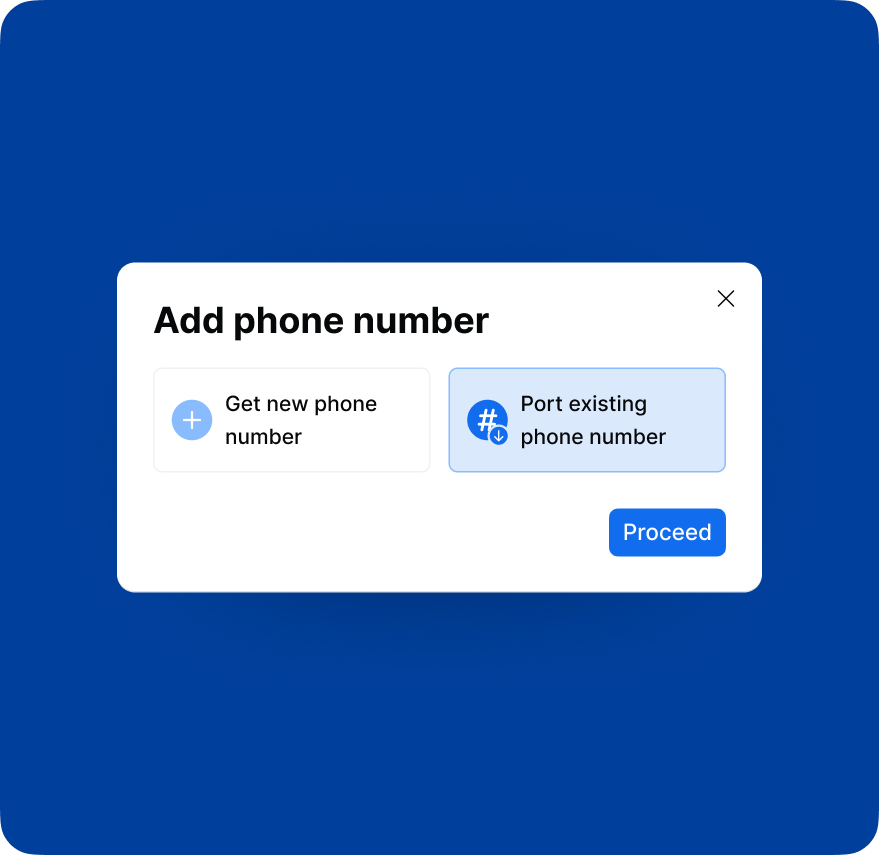
To start a number port with DialLink, simply fill out the guided form and upload the required documents:
- The authorized user’s first and last name
- A valid service address (must be a physical address, not a P.O. Box)
- A signed Letter of Authorization (LOA)
- A Customer Service Record (CSR) from your current carrier
- A recent phone bill (issued within the last 30 days) showing your account details and the number(s) to be ported
Verify Number Ownership and Eligibility
After your request is submitted, DialLink will verify that you own the number and that it’s eligible for porting. This step involves checking your account information with your current carrier, which may take a few days. If additional details or documentation are required, DialLink will contact you via email.
Wait for the Porting Process to Complete
During this stage, your new provider will collaborate with your current carrier through secure industry databases to reroute your number to the new network.
Once verification is complete, DialLink begins processing your request. The entire process typically takes between 2 to 4 weeks, depending on your current provider and the type of number being transferred. While you wait, you can track your request in the Porting Requests table, where you’ll see real-time status updates and the confirmed porting date once it’s scheduled.
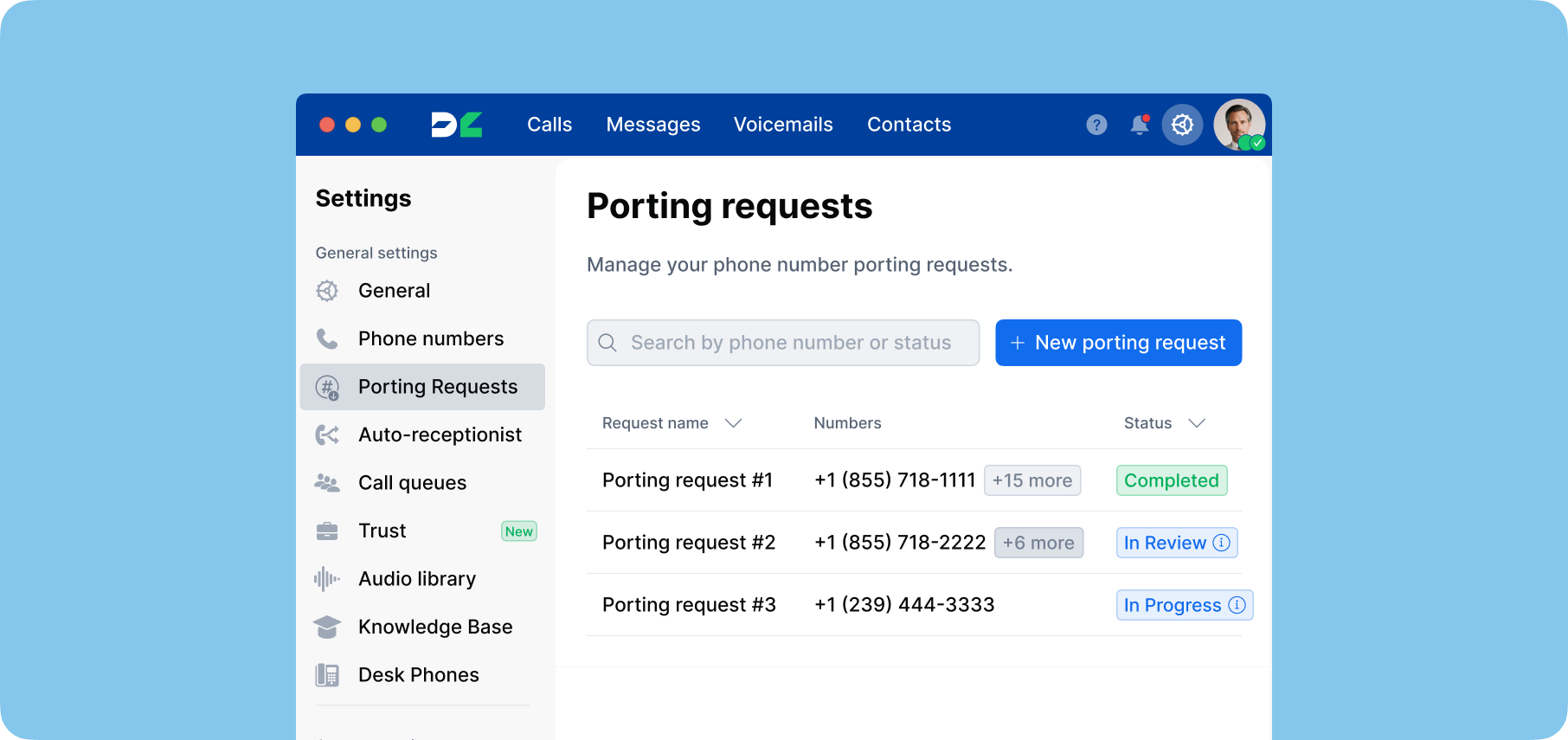
If everything is approved, your previous carrier will confirm the request, set a transfer date, and coordinate the handover. On that date, your number will automatically move from your old provider to the new one. There may be a brief overlap or short downtime during the switch, but in most cases, the transition is seamless.
Contact Your Old Provider to Cancel Your Contract
While your new provider takes care of transferring your phone number, they do not cancel your contract with the old one. After the porting process is complete, you’ll need to formally end your service with your previous provider.
If you had a fixed-term contract, you’re still responsible for any remaining fees or obligations outlined in that agreement. Remember, number porting only transfers the phone number, not your contract or billing responsibilities. Always confirm the cancellation with your old provider to avoid unexpected charges or continued billing.
Start Using Your Number on Your New Provider
When the porting process is complete, your number will be fully activated on DialLink’s platform. From that point, you can make and receive calls and messages using your existing number.
If your business uses multiple phone lines, DialLink allows you to port them all at once. Single-number ports are usually quick and straightforward, while bulk ports may take longer and require more coordination. Still, the process and outcome remain the same: your numbers move with you, without losing connection to your customers.
Conclusion
There are many reasons why you might need to move your phone number to another carrier or phone system: from lowering costs to upgrading to a more modern platform. Whatever the reason, you shouldn’t have to lose your trusted number in the process.
Number porting offers one of the most convenient ways to make the switch without disrupting your communication or confusing your customers.
DialLink’s business phone system makes number porting even more convenient. If you decide to move your phone number to DialLink, you can start the process right within the platform by completing a guided form, without the need for a phone call or back-and-forth emails. You’ll have full visibility into each stage of the process and receive automatic email updates until your number is successfully transferred.
Once you’re set up, you’ll get more than just a phone system. DialLink combines calls, texts, WhatsApp for Business, and voicemails into one app, helping your business stay organized with communications and ready to serve customers from anywhere.
Porting number means transferring your existing phone number from one carrier or phone system to another. It allows you to keep the same number even after changing the company that provides your phone service.
A ported number is a phone number that has been transferred to a new provider. For example, if your business number started out with AT&T and you ported it to Verizon, it is now a ported number. In everyday use, there’s no difference. It’s the same number, just now serviced by a different company.
The exact timeframe depends on your current and new provider. On average, number porting takes between 2 to 4 weeks, although in some cases, single-line ports can be completed in just a few business days. Larger or more complex ports, such as those involving multiple numbers or business accounts, may take longer.
Most providers, including DialLink, do not charge extra fees for number porting. However, some carriers may apply a small administrative fee or require your account to be fully paid and in good standing before approving the transfer. It’s always best to confirm with both your old and new provider.
You should wait until the porting process is fully complete before canceling your existing service. If you cancel too early, your number may be disconnected, making it impossible to transfer.
Featured Tags
Share


Arina Khoziainova
Content Writer at DialLink
Arina is a content writer with over 7 years of experience in the IT industry. At DialLink, she creates clear, insightful content that helps small business and startup owners simplify communication and drive growth using modern tools. With a strong focus on practical value, Arina transforms complex topics into accessible, actionable stories.

Keep Reading

Virtual Local Phone Numbers: Overview and Benefits
Explore everything you need to know about virtual local phone numbers to help you choose the right one for your business.
December 13, 2025
7 minutes

Local Vanity Phone Numbers for Business: What They Are and How to Get One
Read about what a vanity local phone number is, how businesses use them, and how to get one for your company.
December 12, 2025
8 minutes

The Ultimate Guide to Local Phone Numbers for Business
Explore what local phone numbers are and how your business can easily get one.
December 09, 2025
6 minutes
How to Get a US Toll-Free Number for Your Business
Discover how to get your US toll-free number the easy and affordable way.
December 05, 2025
8 minutes

What Is an International Phone Number and How to Get One?
Learn what an international phone number is, see examples from major cities worldwide, and discover why having one can be essential for your business.
October 23, 2025
13 minutes
What Is a Toll-Free Phone Number and Why Your Small Business Should Have One
Find out what a toll-free number is, the costs associated with it, and how to get a toll-free phone number for your business.
October 15, 2025
13 minutes
What Is a Business Phone Number? Everything You Need to Know
Read what a business phone number is, why it’s critical for every business, and the ways you can get one.
October 06, 2025
11 minutes

What Is a VoIP Number and How Does It Work?
Explore what VoIP numbers are, how they differ from landline and mobile phone numbers, and who can benefit from using them.
October 06, 2025
11 minutes