
The Best AI Solutions for Virtual Receptionist Call Summaries (2026)
Explore the best AI call summary solutions for virtual receptionists. Compare their features and capabilities for small businesses and startups.



Your virtual receptionist already handles much of the heavy lifting, answering calls, routing callers, and collecting key information. But once the call ends, teams still need clear visibility into what actually happened and what needs to happen next.
AI call summaries solve this by automatically capturing every interaction in a clear, structured format, without relying on manual notes or replaying recordings.
If you’re looking for the best AI call summary solution for virtual receptionists, this article is for you. Below, we explore and compare leading AI call summary tools, highlighting the features that matter most for small businesses and startups.
What is an AI Call Summary?
An AI call summary is an overview of a phone conversation automatically generated using artificial intelligence. AI "hears” spoken conversations, converts them into a text, and extracts the necessary details.
In addition to call transcription, which captures conversations word for word, AI can distill long calls into easy-to-scan summaries that highlight key points, decisions, and important details. Many AI call summary tools also identify action items from conversations, such as follow-ups, commitments, or next steps.
More advanced systems can go beyond content analysis to interpret how something was said, not just what was said. This includes detecting emotional tone and summarizing overall sentiment, such as whether a caller sounded satisfied, neutral, or frustrated. Some tools can also automatically tag calls based on topics or predefined keywords, making conversations easier to organize and review later.
How Do AI Call Summaries Work with Virtual Receptionists?
When used with a virtual receptionist, AI call summaries are generated automatically during or immediately after each handled call. As calls come in, the virtual receptionist answers the call, responds to common questions, shares information, or collects details from callers based on predefined rules. At the same time, the conversation is recorded and transcribed in the background.
AI call summaries work the same way regardless of whether the call is handled by a human or an AI-powered virtual receptionist. Once the call ends, AI analyzes the transcript and quickly produces a clear overview of the conversation. These summaries are typically stored directly within the call details or call logs, depending on the software being used.
As a result, all interactions handled by the virtual receptionist remain well documented, making it easy to review performance or understand what each caller needed without listening to full recordings. If urgent action points are identified during the conversation, they are highlighted as next steps so nothing is missed.
Key Features of the Best AI Virtual Receptionist Call Summaries
With so many AI solutions available, it can be difficult to determine which one offers the most efficient call summary system for your AI receptionist. Below are the key features that separate nice-to-have tools from solutions that deliver truly actionable insights.
Accurate Call Summaries
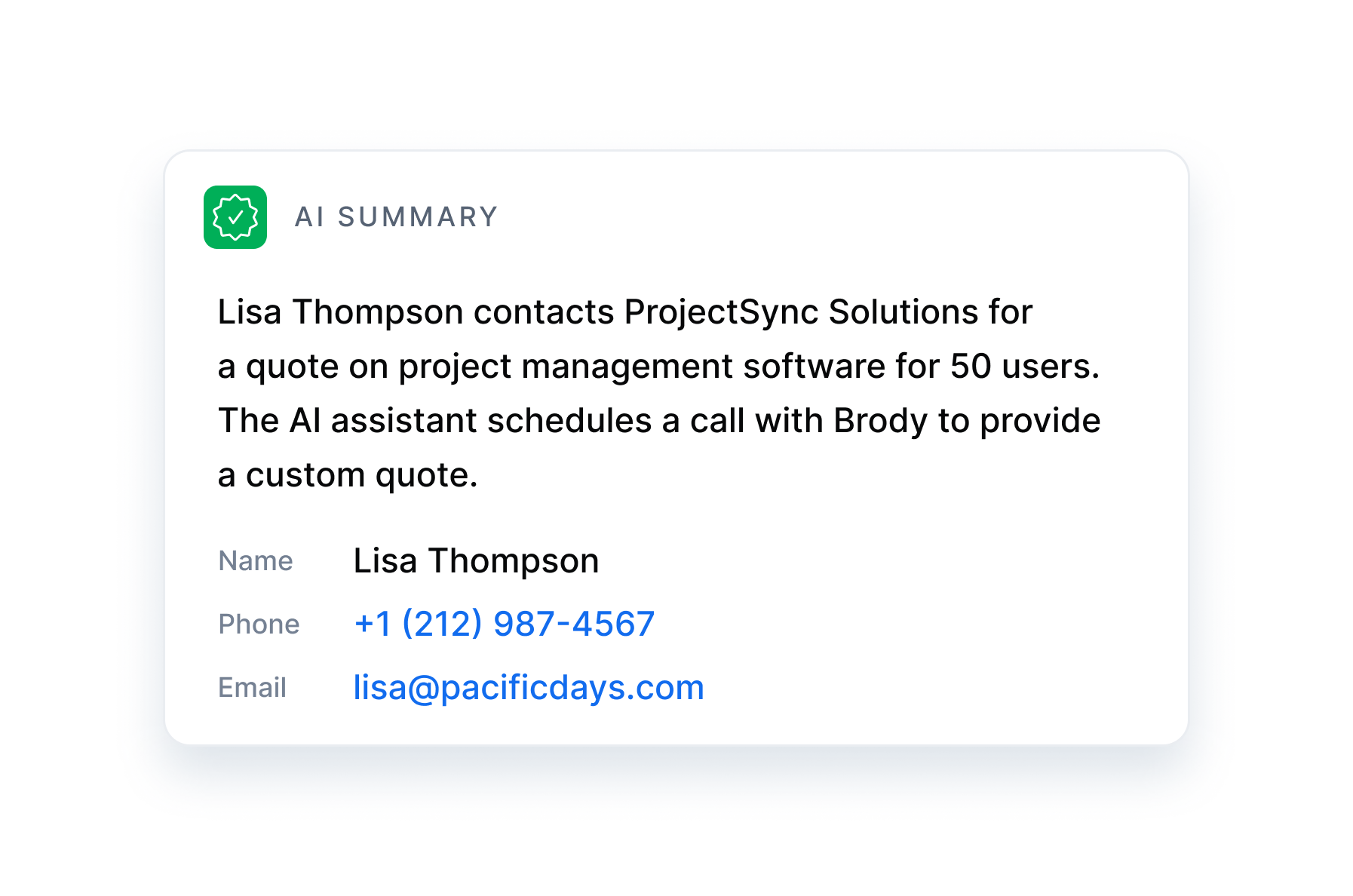
At its core, an AI call summary tool should generate clear and reliable summaries that capture the essence of each conversation. A strong summary explains what the call was about and how it concluded, without losing important context or introducing inaccuracies.
Accurate Next-Step Identification
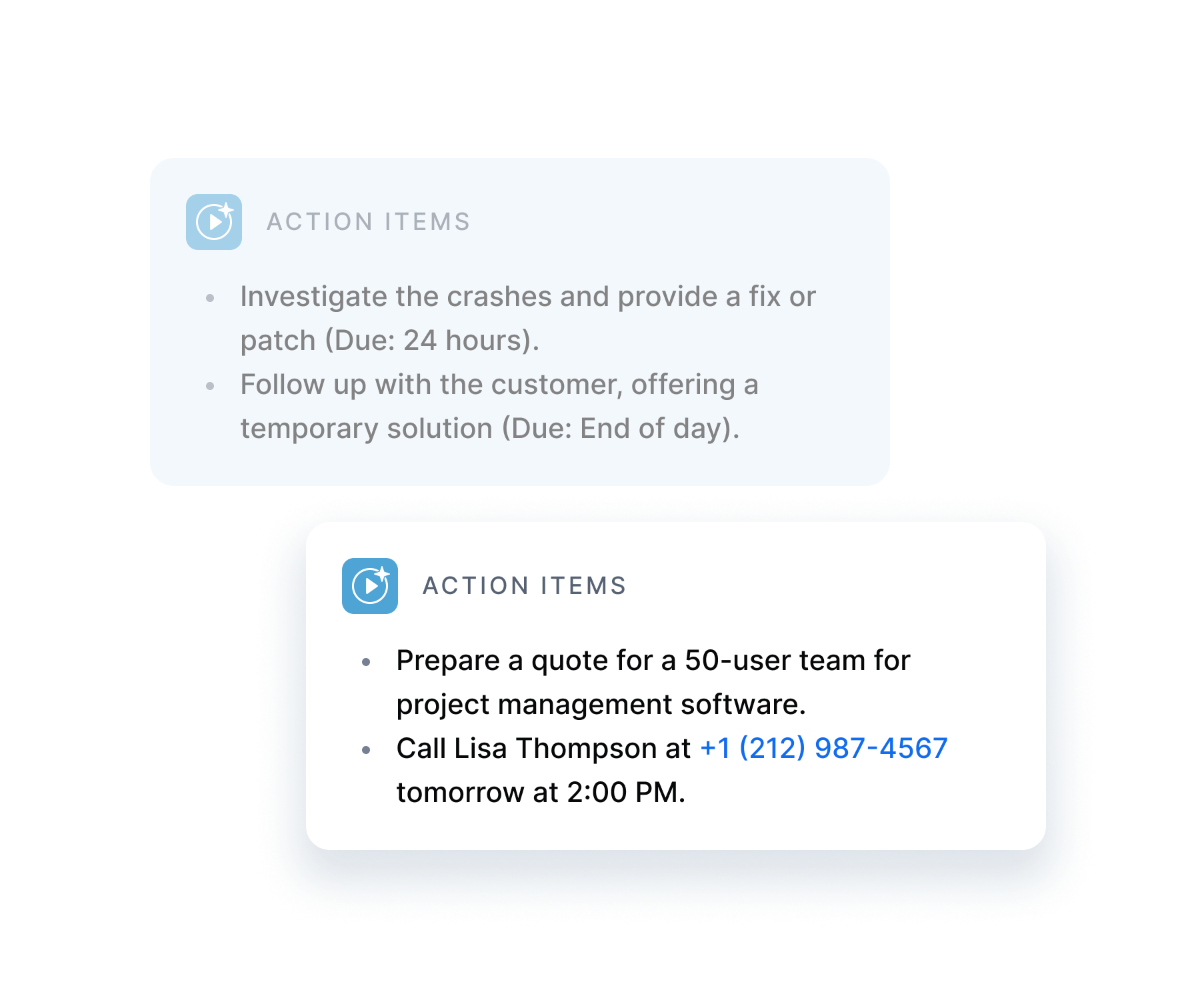
Beyond summarizing conversations, the tool should reliably identify next steps and follow-up actions. This includes detecting commitments, deadlines, and responsibilities mentioned during the call, helping teams respond quickly and stay accountable.
Intelligent Topic and Keyword Tagging
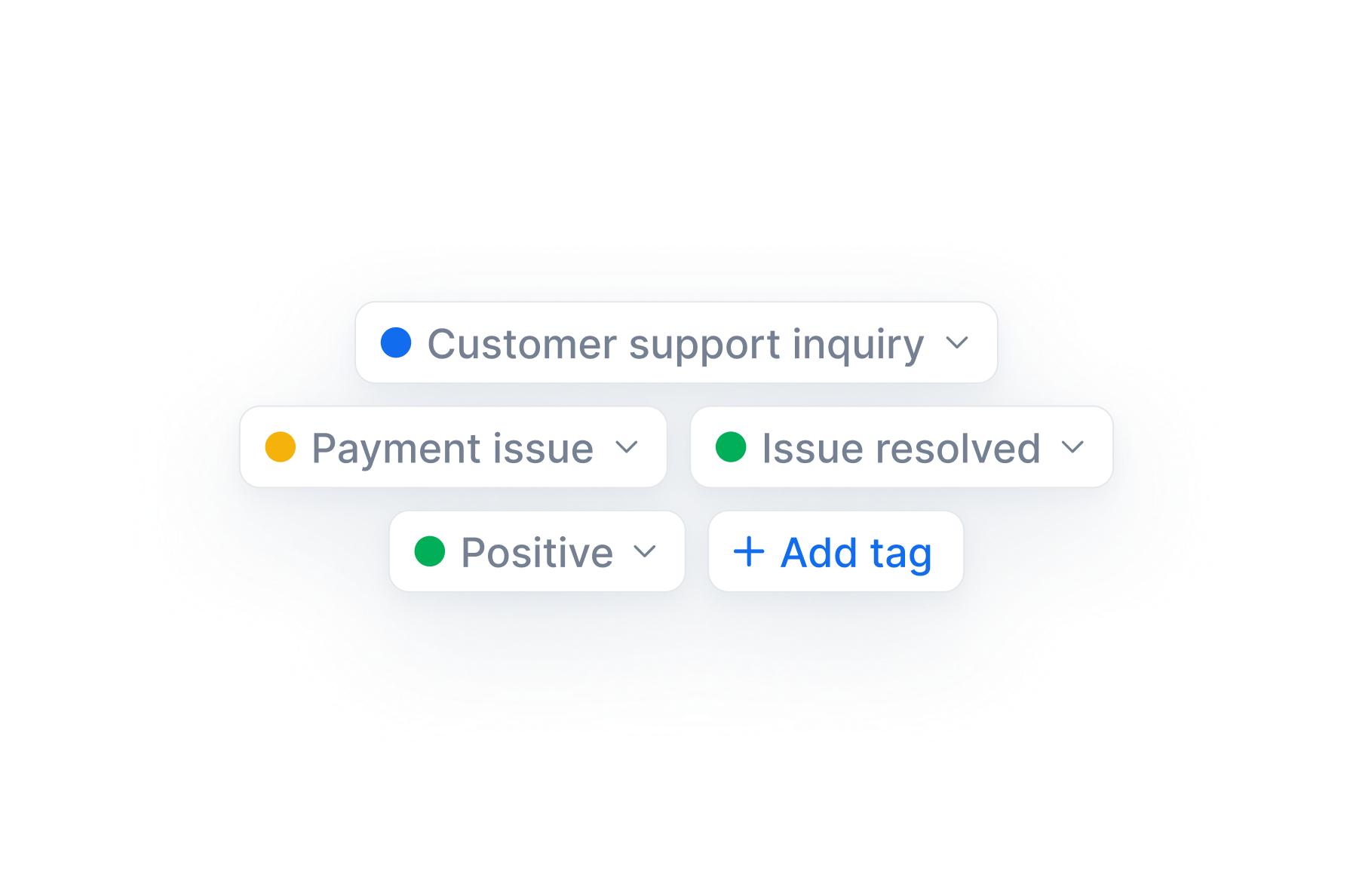
Look for tools that automatically tag calls based on relevant topics or keywords, such as pricing inquiries, technical issues, or demo requests. The ability to customize tags is especially valuable, as it allows teams to organize calls in a way that aligns with their workflows and priorities.
Sentiment Analysis
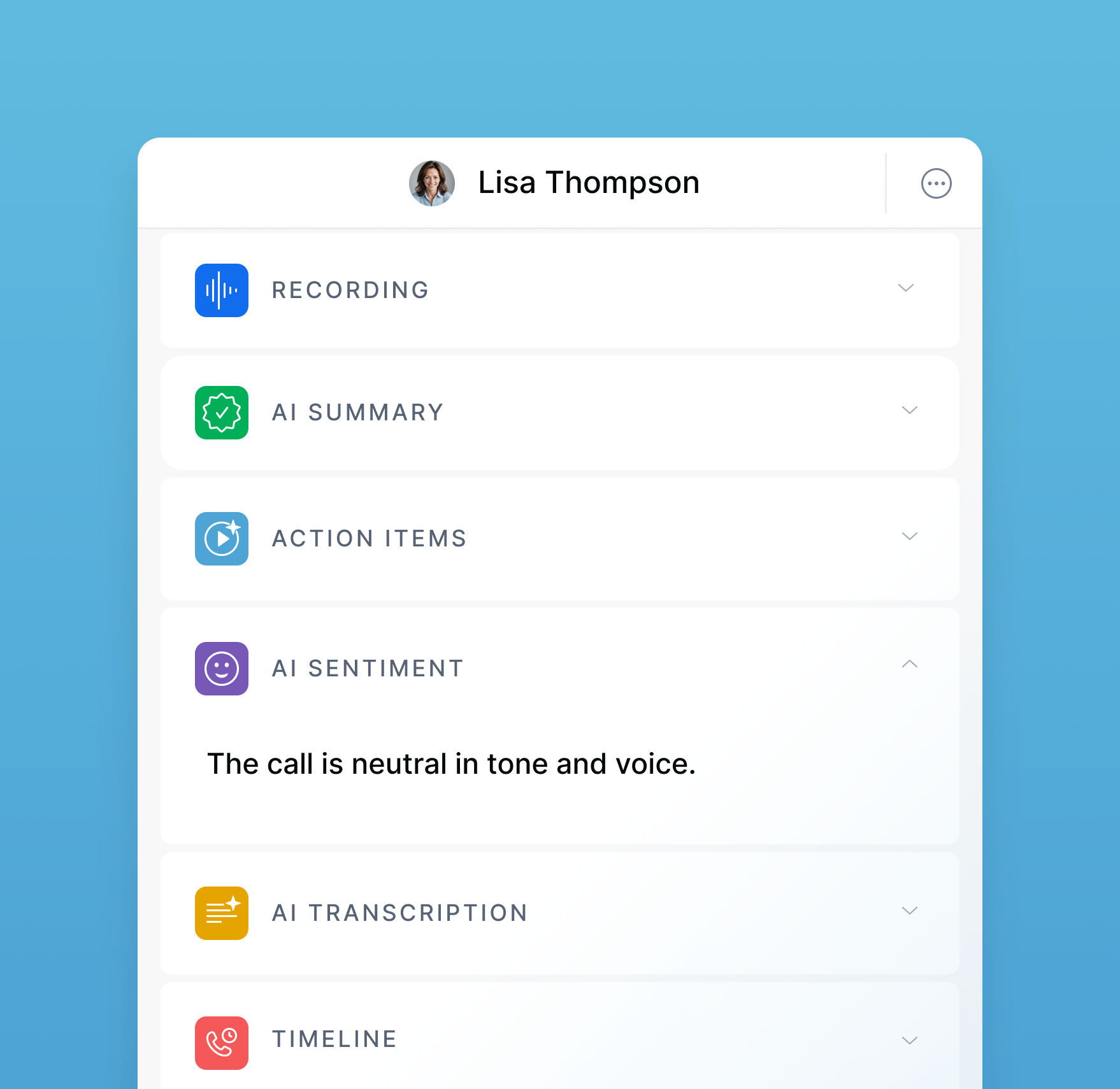
Sentiment analysis adds another layer of insight by showing how a caller felt during the conversation. By identifying positive, neutral, or negative tones, these tools help teams better understand customer satisfaction and flag interactions that may require follow-up.
Integration with Existing Tools
AI insights are most effective when teams can act on them immediately. The solution should integrate seamlessly with your CRM or helpdesk so automated call summaries, transcripts, and tags are automatically linked to customer records. This reduces manual work and gives teams a complete, up-to-date view of each interaction within the tools they already use.
Multilingual Support
For businesses working with international customers or multilingual teams, multi-language call summaries are essential. Strong language support ensures consistent insights across regions and reduces the need for manual translation.
Top-Rated Call Summary Software for AI Receptionists
Before comparing AI call summary solutions, it’s important to understand that they can be delivered in different ways.
Standalone AI call summary software operates as separate applications that connect to the communication platform or the business phone system used by your virtual receptionist. Features vary widely by provider and plan. Some tools focus on basic capabilities such as call transcription and short summaries, while others are built for call centers or sales teams and offer deeper insights into customer satisfaction, agent performance, and sales metrics.
Another option is AI call summary functionality built directly into a business phone system. In many cases, these platforms also include a virtual receptionist as part of the core service. This integrated approach is often more cost-effective and easier to manage for small businesses, since call handling, AI-generated summaries, transcripts, and insights all live in one place without requiring additional tools or complex integrations.
Best AI Call Summary Services for Virtual Receptionists
Below is an overview of popular standalone AI call summary tools that can be used with virtual receptionists. These apps operate independently from phone systems and can be connected through native integrations, Zapier, or APIs.
Otter.ai
Otter.ai is a well-known AI transcription and call summary tool that works for both meetings and phone calls. It offers real-time transcription, searchable summaries, and keyword highlights, making it easy to review conversations handled by a virtual receptionist. Otter also includes collaboration features that allow teams to comment on, share, and revisit summaries. In addition, Otter’s AI Chat lets users ask questions about past conversations and quickly find relevant information.
If your virtual receptionist is part of a phone system, Otter.ai supports direct integrations with a limited number of providers, including RingCentral, Dialpad, JustCall, and Zoom Phone. For other phone systems, integration is typically handled through Zapier, as Otter does not currently offer a public API.
Fireflies.ai
Fireflies.ai is an AI meeting assistant that automatically generates call transcriptions, summaries, and action items. It can also surface key insights and context from previous conversations, helping teams prepare more effectively for upcoming meetings or follow-ups after virtual receptionist calls.
Fireflies.ai integrates with many communication platforms used for virtual reception and call handling, including cloud phone systems such as OpenPhone, Aircall, RingCentral, and Zoom Phone. If your platform isn’t supported natively, you can connect Fireflies using Zapier or its API to capture and summarize calls.
tl;dv
tl;dv generates call recordings, transcriptions, notes, and summaries in more than 30 languages. It also allows users to ask AI questions across multiple calls at once, making it useful for identifying patterns or extracting insights at scale.
tl;dv does not offer native integrations with business phone systems. However, limited integrations are available via Zapier for platforms such as Dialpad and RingCentral. A public API is not currently available.
Avoma
Avoma offers an AI meeting assistant that supports call recording, transcription in 60+ languages, and AI-generated summaries with key takeaways. It also allows teams to create notes based on custom templates for different meeting types. Avoma can automatically generate follow-up emails that recap conversations and outline next steps, helping teams maintain momentum with minimal manual effort.
Avoma integrates with several business phone systems commonly used with virtual receptionists, including Dialpad, Aircall, RingCentral, and Zoom Phone.
Top-Rated VoIP Systems with AI-Generated Call Summaries
In addition to standalone tools, some VoIP systems include AI-generated call summaries directly within their platforms, alongside calling and virtual receptionist capabilities. This makes them a practical option for businesses that want fewer tools and more streamlined workflows. Below are several well-known VoIP systems that offer AI-powered call summaries as part of their products or product ecosystem.
Quo (OpenPhone)
Quo is a virtual phone system for small businesses that offers AI-generated call summaries alongside its AI receptionist, Sona. AI call summaries include detailed transcriptions, concise summaries, and identified next steps. These summaries are available for calls handled by both human team members and the AI receptionist, providing consistent visibility across all interactions.
RingCentral
RingCentral is one of the largest VoIP providers on the market. Its core business phone system, RingEX, includes AI-powered features such as call transcriptions, summaries, and notes in standard plans. However, AI receptionist functionality is offered only as a separate add-on, which may increase costs for businesses seeking a fully AI-driven reception workflow.
Dialpad
Dialpad Connect is an AI-driven business phone system where AI automatically transcribes calls, generates notes, and surfaces insights. Dialpad also offers more advanced solutions for sales and support teams, with AI features designed for coaching, onboarding, and deeper call analysis.
While Dialpad has announced plans for an AI-powered virtual receptionist, this product is not yet generally available.
DialLink: The Best AI Call Summary Solution for Virtual Receptionists
As you’ve seen, businesses can choose between standalone AI call summary tools or platforms that combine virtual receptionist capabilities with built-in AI call summaries. The right option depends on whether you want separate tools or a unified solution.
If you’re looking for a unified solution, DialLink is a strong option to consider.
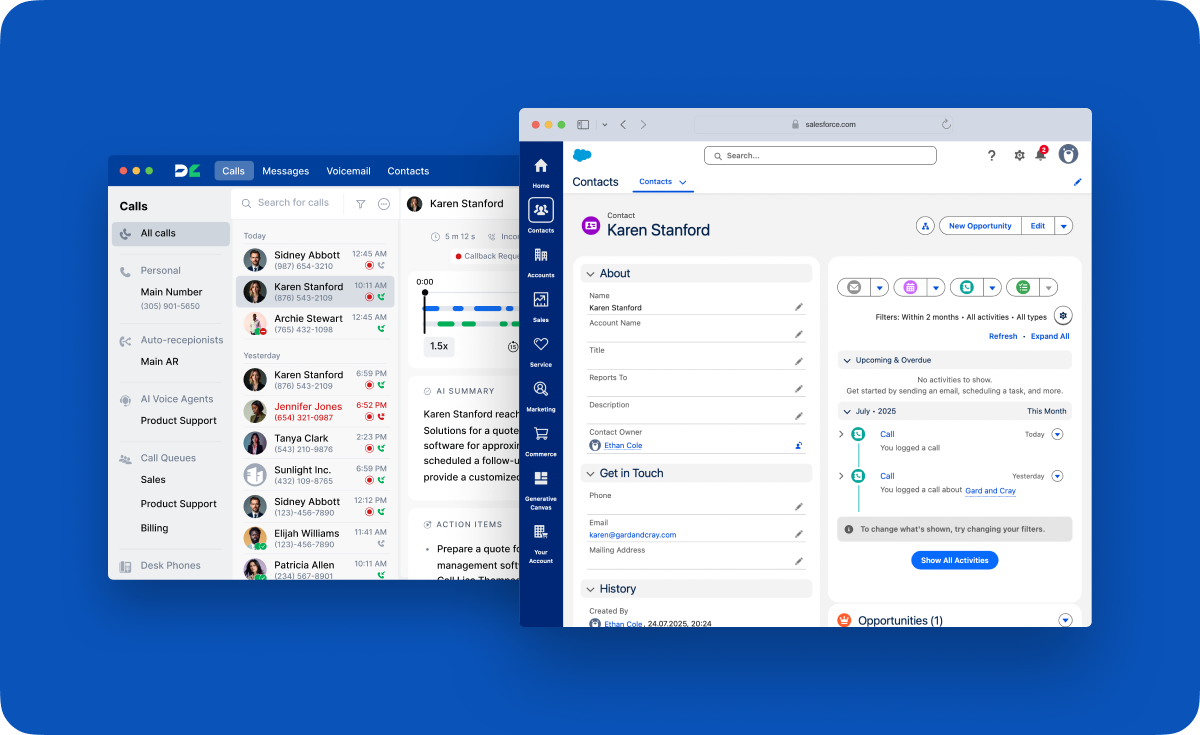
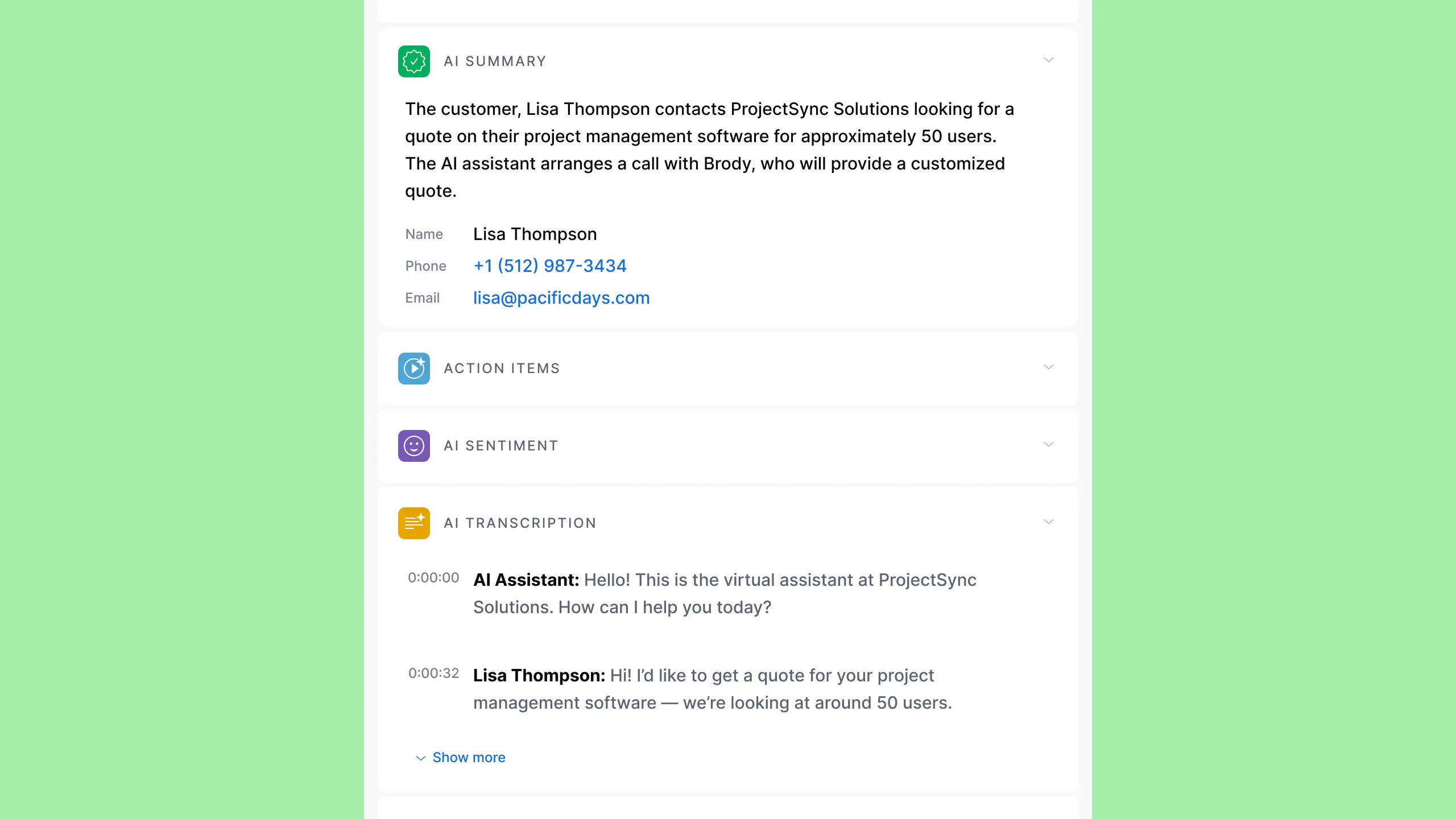
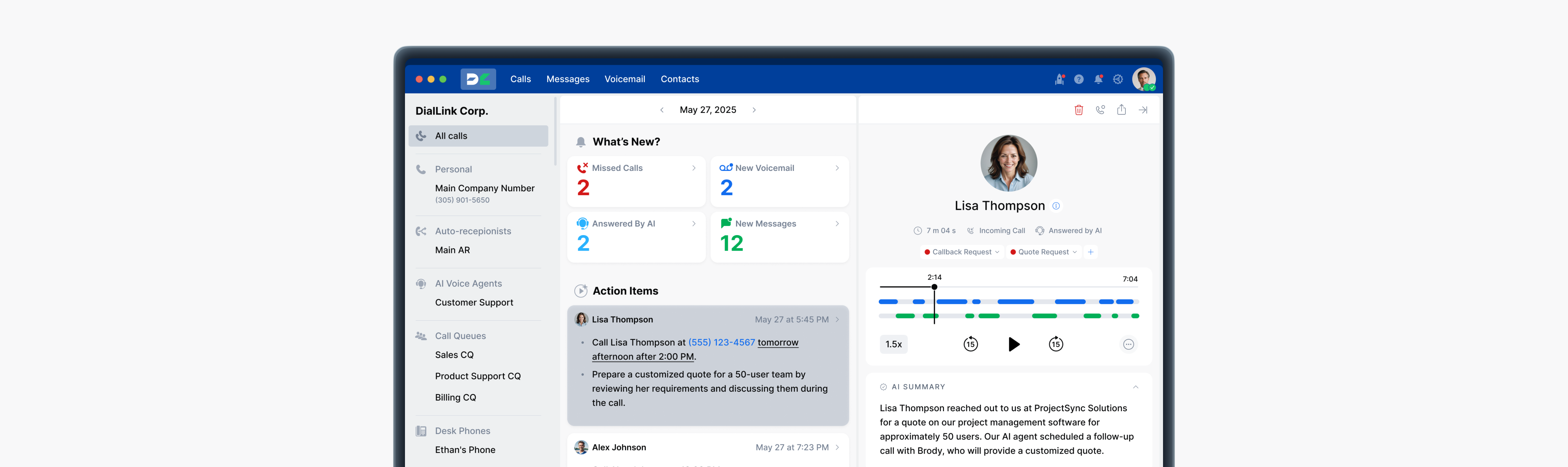
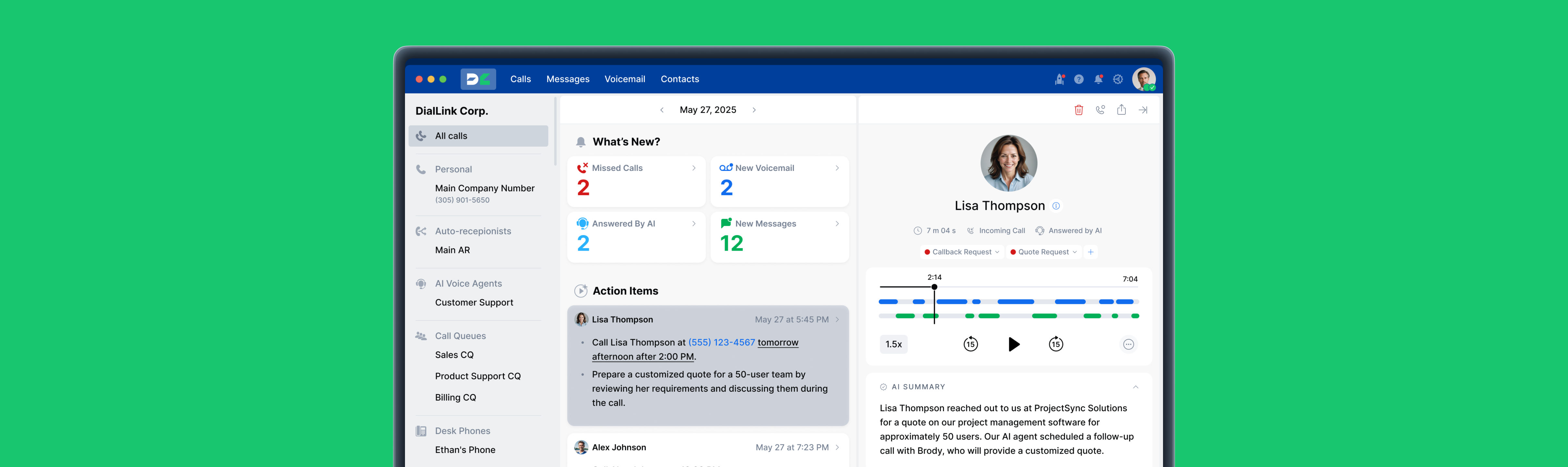
DialLink is a business phone system that brings calls, text messages, voicemails, and AI-generated call summaries into one centralized workspace. Instead of switching between multiple apps, your team can review call summaries, action items, sentiment analysis, and call tags directly within each conversation.
DialLink also offers native Salesforce integration, allowing AI-powered call summaries to automatically sync with relevant Salesforce records. This ensures customer conversations, insights, and follow-ups are always available inside the CRM your sales and support teams already use.
Because AI call summaries are built directly into the DialLink business phone system, there’s no need to invest time or money in additional integrations. These features are included in DialLink’s core plans, giving you advanced AI call insights without add-ons, extra subscriptions, or hidden costs.
Ready to see AI call summaries in action? Try DialLink free for 7 days.
When used with a virtual receptionist, AI call summary software records and transcribes calls handled by the receptionist, whether human- or AI-powered. After the call ends, AI analyzes the transcript to generate a concise summary, highlight key points, and extract next steps. These summaries are stored with call records or synced to connected systems, allowing teams to review interactions and act without listening to full recordings.
There’s no single best AI call summary service for every business, as the right choice depends on your workflow and integrations. If you’re looking for standalone tools, options like Otter.ai, Fireflies.ai, Avoma, and tl;dv are among the most popular, offering AI-generated summaries, transcripts, and action items.
If you need a unified solution that combines a virtual receptionist with built-in AI call summaries, DialLink’s business phone system is a strong option to consider.
Featured Tags
Share


Arina Khoziainova
Content Writer at DialLink
Arina is a content writer with over 7 years of experience in the IT industry. At DialLink, she creates clear, insightful content that helps small business and startup owners simplify communication and drive growth using modern tools. With a strong focus on practical value, Arina transforms complex topics into accessible, actionable stories.

Keep Reading

AI Call Summary Tools: Types and Features for Small Businesses
Learn what an AI call summary is, explore the different types of tools available for small businesses and startups, and understand how they work.
January 06, 2026
9 minutes

What Is Call Monitoring and Why Is It Important?
Learn what call monitoring is, how it works, and how call monitoring tools improve service quality and agent performance.
September 03, 2025
15 minutes

What Is a Call Log and Why Is It Essential for Small Businesses and Startups?
Learn what a call log is, the insights it provides to businesses, and how call log apps and software help you review call log history.
August 14, 2025
11 minutes

What’s New in DialLink: AI Call Tagging, Call Transfers and Knowledge Bases for AI Voice Agents
Explore what’s new in DialLink: AI call tagging, call transfers and knowledge bases for AI voice agents and more.
July 03, 2025
2 minutes
Benefits of a Cloud-Based Phone System for Small Businesses and Startups
Explore why a cloud-based phone system is the most beneficial and cost-effective choice for small businesses and startups compared to traditional phone systems.
June 23, 2025
9 minutes
Top 10 Best Medium-Sized Business Phone Systems in 2026
Compare the top business phone systems for medium-sized businesses to find a solution that fits your team’s size, budget, and growing communication needs.
October 21, 2026
25 minutes
Top 10 Best Business Phone Systems for Small Businesses in 2026
Compare the 10 best small business phone systems based on features, pricing, and ease of use to find the right fit for your business.
October 20, 2026
23 minutes

What's New in DialLink: AI Messaging Agents, Smarter AI Customization and More
See what's new in DialLink this month: AI messaging agents for SMS and WhatsApp, more control over AI agent settings, improved Salesforce integration and more.
September 22, 2026
5 minutes