
AI Call Summary Tools: Types and Features for Small Businesses
Learn what an AI call summary is, explore the different types of tools available for small businesses and startups, and understand how they work.



In this article
- What Is an AI Call Summary?
- How Do AI Call Summary Tools Work?
- Why Do Small Businesses Use AI Call Summary Tools?
- Types of AI Call Summary Tools for Small Businesses (Overview)
- Key Features to Look for in AI Call Summary Tools
- DialLink: Your AI Call Summary Tool Natively Integrated into a Business Phone System
Your team handles dozens of calls every day, from sales conversations and customer service to internal meetings. Each call contains important details, decisions, and next steps that need to be captured to keep work moving forward.
But when everything relies on manual note-taking, valuable time is lost, and important information can still slip through the cracks. Re-listening to call recordings just to figure out what happened is not realistic. And let’s be honest, who has time for that?
This is exactly where AI call summary tools can help. They don’t just record conversations; they intelligently analyze them. By automatically generating clear call summaries, identifying key topics, and highlighting next steps, these tools turn messy conversations into structured, actionable insights.
In this post, we explain what an AI call summary is. We also explain how it works and cover the types available for small businesses and startups. This helps you choose the approach that best fits your workflow.
What Is an AI Call Summary?
An AI call summary is a written overview of a phone conversation generated automatically using artificial intelligence. These tools use artificial intelligence to analyze spoken conversations and convert them into concise, structured text. Depending on the system, the summary may be made in real time during the call. Or it may be created automatically after the call ends.
Unlike basic call transcription, which captures speech word for word, call summary AI focus on meaning and outcomes. These tools turn long transcripts into short, easy-to-read summaries. They highlight the most important points, key decisions, and relevant details.
In addition, generative AI call summaries extract action items from customer conversations, such as follow-ups, commitments, or next steps.
More advanced AI call summary systems can also analyze how someone said something, not just what they said. This may include detecting emotional tone and summarizing overall sentiment, for example, whether a customer sounded positive, neutral, or frustrated. These tools can also automatically tag calls based on predefined keywords or conversation topics.
How Do AI Call Summary Tools Work?
AI call summary tools use speech-to-text and large language models to analyze conversations. They identify key themes, sentiment, action items, and decisions. Then they create a structured and concise summary. While the exact process varies by tool, most follow a similar multi-step workflow.
While the exact process varies by tool, most follow a similar multi-step workflow.
1. Call capture and speech recognition. First, the system records audio from a call or meeting. It then uses speech-to-text to turn speech into a written transcript.
This step creates a text-based record of the conversation and may distinguish between different speakers in the transcript.
2. Conversation analysis. Once the transcript is created, large language models analyze the content to understand context and intent. These models are trained on vast amounts of conversational data.
During training, they learn how people typically express patterns such as questions, requests, decisions, objections, and resolutions. For example:
- “I’ll follow up with you by Friday.”
- “Let me send you the contract.”
- “Can you call me back next week?”
- “We’ll schedule a demo.”
3. Summary generation. The summary highlights the most important points of the conversation. It includes key outcomes and relevant details. It lets people avoid reading the full transcript.
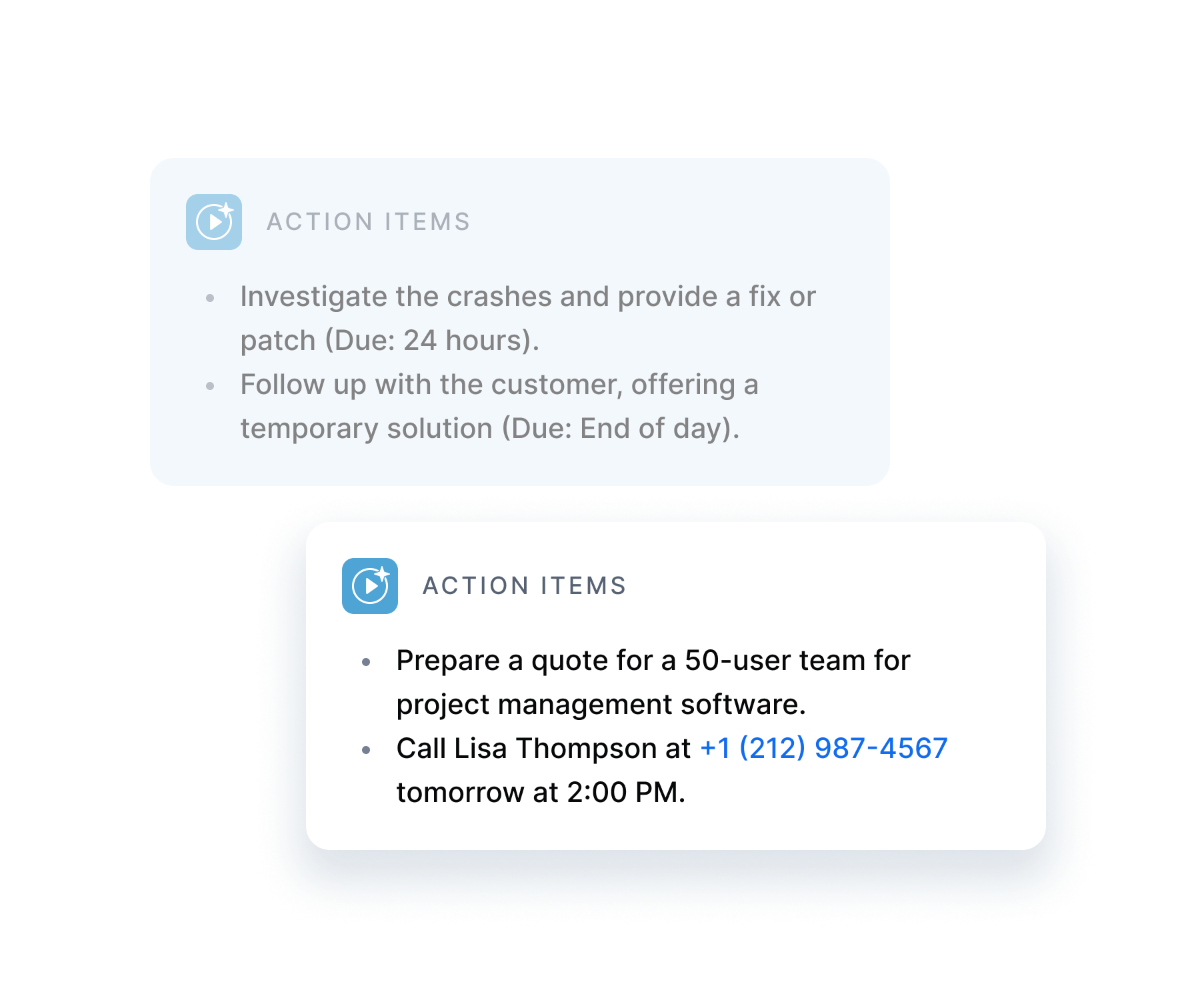
4. Action item extraction. Many AI call summary tools automatically identify action items and next steps mentioned during the call.
To do this, the tools look for specific language patterns that commonly indicate next steps, including:
- Future-oriented verbs: will, should, need to, plan to
- Commitments: I’ll send, we’ll review, you’ll receive
- Requests: Can you…, Could you…, Please…
- Time references: tomorrow, next week, by Monday
5. Sentiment analysis. Some AI tools can also analyze sentiment or surface insights such as customer intent or urgency. From a technical standpoint, this is typically done using large language models that evaluate word choice, phrasing, and context within the conversation.
These models look for signals such as emotionally charged language, repeated concerns, or expressions of satisfaction or frustration to estimate overall sentiment.
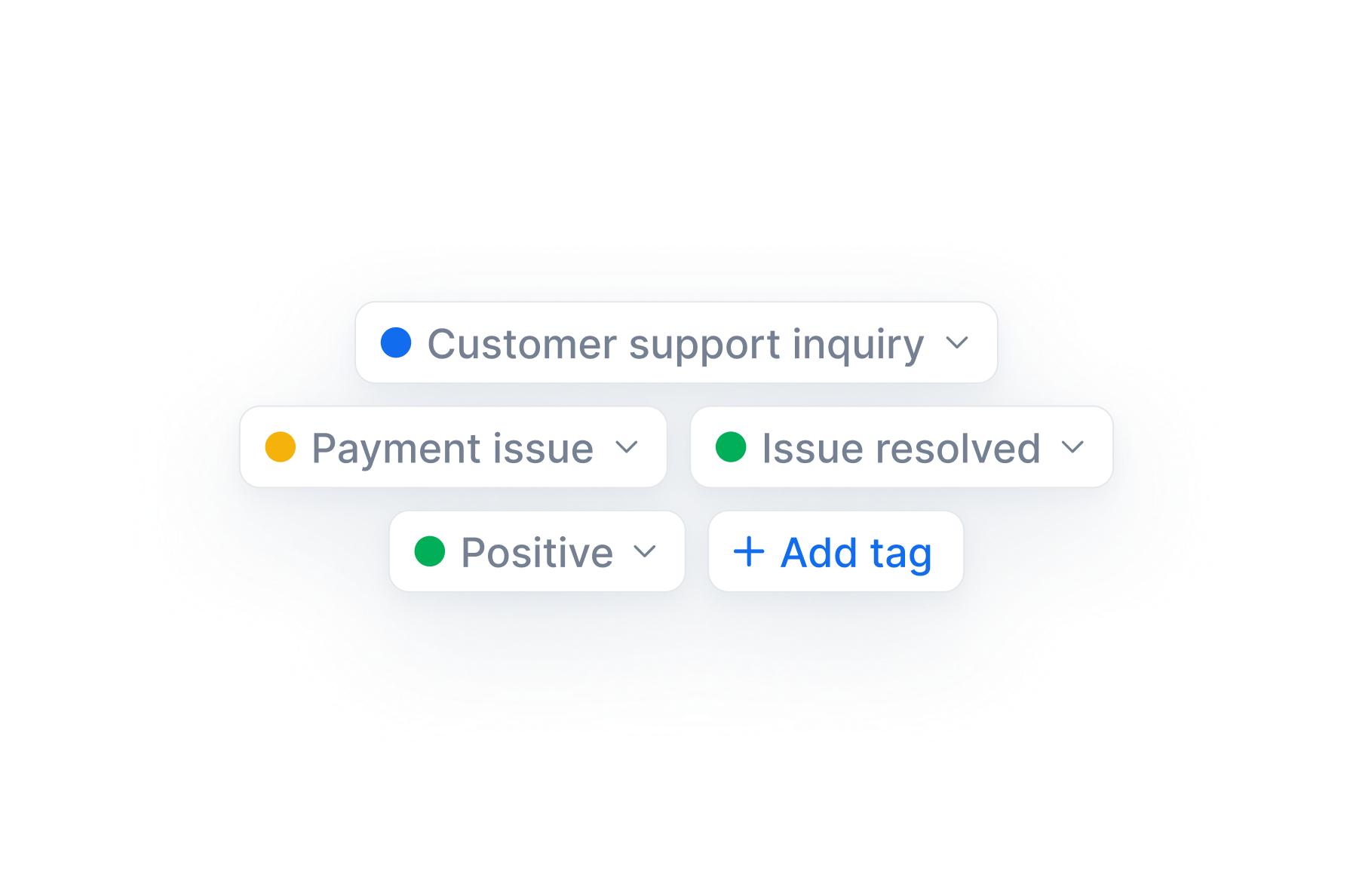
6. Tagging and organization. To organize conversations, the system compares the transcript and summary to predefined topics and keywords. These include pricing, support issues, demo requests, and billing questions. Based on this analysis, tags are applied automatically, making it easier to search, filter, and review calls.
Note: These steps do not always happen in a fixed order. Depending on the tool, some processes may run in parallel or occur earlier or later in the workflow.
Why Do Small Businesses Use AI Call Summary Tools?
For small businesses and startups, budgets are tight. Decisions are made quickly, so important details can get lost. AI tools work like a virtual assistant that joins every call. For example, an AI assistant for sales call summaries and next steps can automatically capture and organize what matters most from customer conversations, including sales call summaries and next steps, without relying on manual note-taking.
Teams can view the full transcript when they need full context. They can read a short summary for a quick overview. They can also use a short action list to track next steps.
One of the biggest advantages is speed. AI-generated call notes are usually ready right after the call ends. You do not need to wait for someone to review recordings. You also do not need to clean up handwritten notes.
This allows teams to act faster and follow up while conversations are still fresh.
For small businesses, automated call summaries deliver several practical benefits:
- Save time. AI phone call summaries eliminate hours of manual note-taking.
- Cost savings. You no longer need to spend valuable team time or hire dedicated staff.
- Keep accurate data for follow-ups. Key points, decisions, and next steps are automatically highlighted, reducing the risk of missed details and improving follow-through.
- Enable easier team collaboration. Shared summaries and transcripts help keep everyone aligned. Whether it’s a sales call, support interaction, or internal update, teams can quickly review and stay on the same page without listening to full recordings.
Types of AI Call Summary Tools for Small Businesses (Overview)
Several delivery methods exist for AI call summary tools. Let’s look at the most common options.
Standalone AI Call Summary Apps or Tools
Standalone tools are separate apps. They connect to the platforms where calls or meetings happen, like communication or phone systems.
Functionality can vary widely depending on the tool and the plan you choose. Some solutions offer simple meeting assistant capabilities, such as basic transcription and short summaries. Others are designed for more complex environments and provide deeper insights into customer satisfaction, agent performance, and overall call quality.
Many standalone tools also support transcription in multiple languages, often 16 or more.
However, there are trade-offs to using standalone apps. Integration is a key consideration, as not all tools connect easily with every platform.
Entry-level plans often support only a few integrations. Broader compatibility is usually available only on higher-tier plans. If your existing tools are not supported, you may end up juggling multiple systems.
Cost is another important factor. Standalone AI call summary tools often charge a monthly fee. Essential features usually cost about $8–$10 per user each month. Advanced analytics and integrations cost more.
AI Call Summary Add-On to Business Phone Systems
While basic call transcription may be included in the main phone system. Features like action item extraction or sentiment analysis often cost extra.
This option can work well if you already use a specific phone system and want to enhance it without switching platforms. However, the main drawback is additional cost, as these add-ons increase your monthly spend on top of the base phone service.
AI Call Summary Built Into Business Phone Systems
Another option is AI-powered call summary functionality that is built directly into a business phone system. This is often the most cost-effective and streamlined approach for small businesses, especially when communication platforms with AI-powered call summaries as part of the core offering or add only a small increase to the overall price.
Call transcripts, summaries, action items, and tags are in one place. This makes it easier for teams to review AI-generated call notes. Teams can follow up fast without switching platforms.
For small businesses, keeping things simple matters. Built-in AI call summaries reduce complexity and lower costs.
Key Features to Look for in AI Call Summary Tools
When choosing between AI tools, it’s important to focus on the features your business actually needs. The right solution should deliver actionable intelligence, not just raw data. Below are the key features to consider when evaluating AI-powered call summary solutions.
- Accurate call summaries. A strong AI call summary highlights what was discussed, why the call happened, and how it ended. It keeps key context and avoids errors.
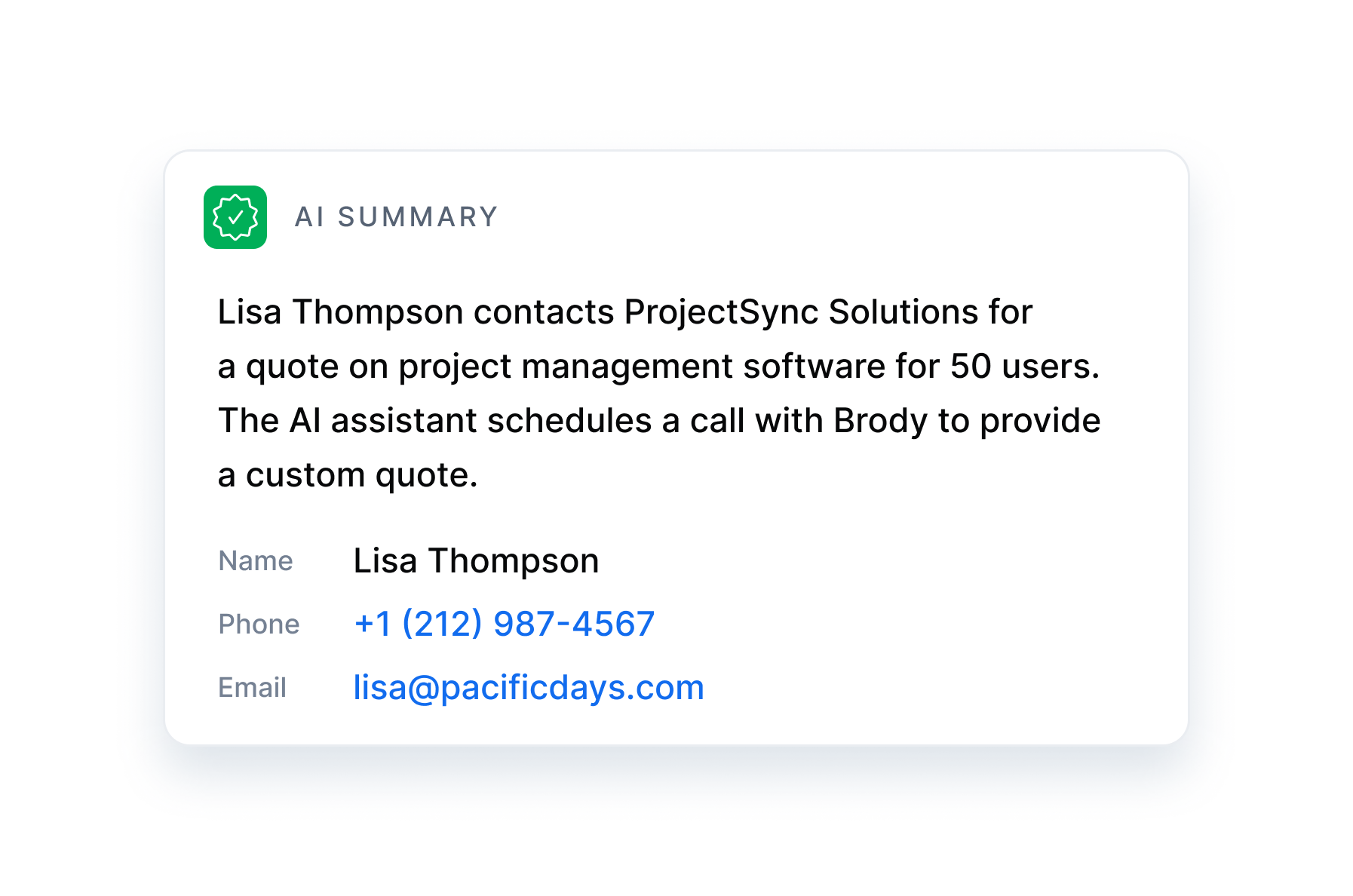
- Accurate next-step identification. Beyond summarizing the conversation, the tool should reliably identify next steps and follow-up actions. This includes recognizing commitments, deadlines, and responsibilities mentioned during the call, helping teams act quickly and stay accountable.
- Intelligent topic and keyword tagging. Look for tools that automatically tag calls with relevant topics or keywords. Examples include pricing, technical issues, and demo requests.
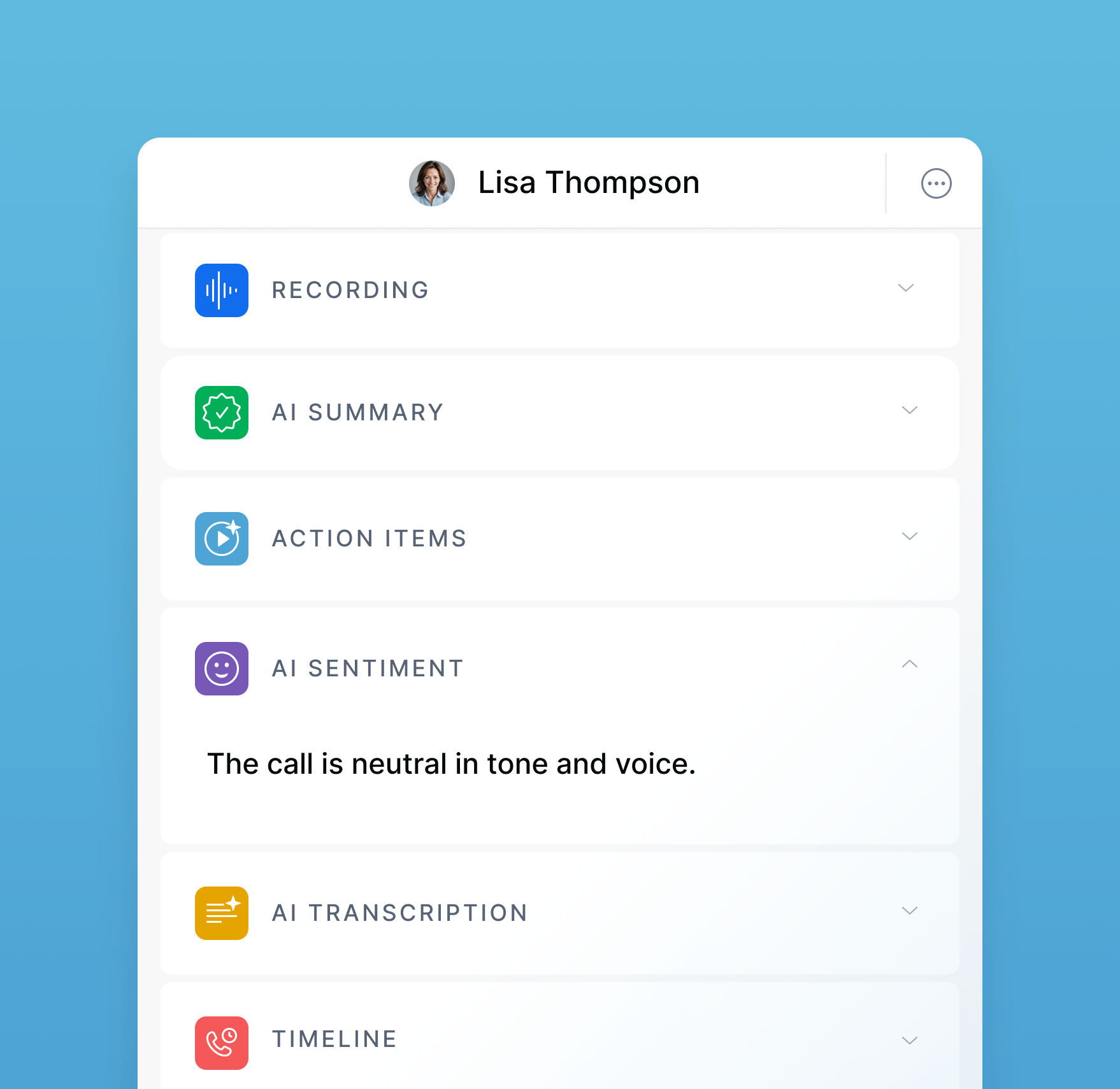
- Sentiment analysis. By detecting positive, neutral, or negative tones, these tools help teams understand customer satisfaction. They also highlight issues that may need follow-up.
- Integration with existing tools. AI insights are only valuable if your team can act on them. The tool should integrate seamlessly with your CRM or helpdesk so call summaries, transcripts, and tags are automatically attached to customer records. This reduces manual data entry and gives teams a complete, up-to-date view of each customer interaction within the tools they already use.
- Multilingual support. If your business works with international customers or multilingual teams, the ability to summarize calls in multiple languages is essential. Strong multilingual support ensures consistent insights across regions and minimizes the need for manual translation.
DialLink: Your AI Call Summary Tool Natively Integrated into a Business Phone System
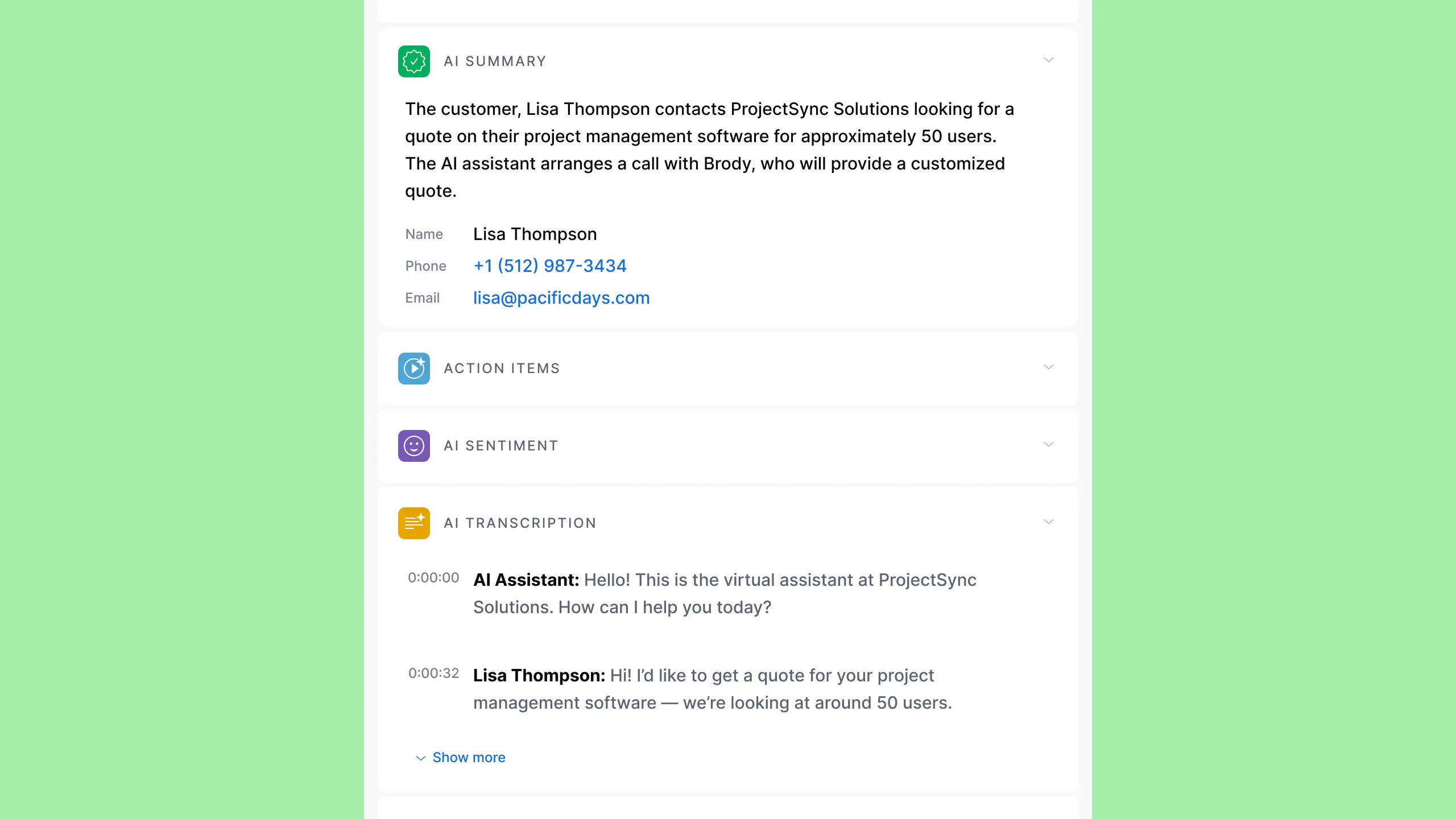
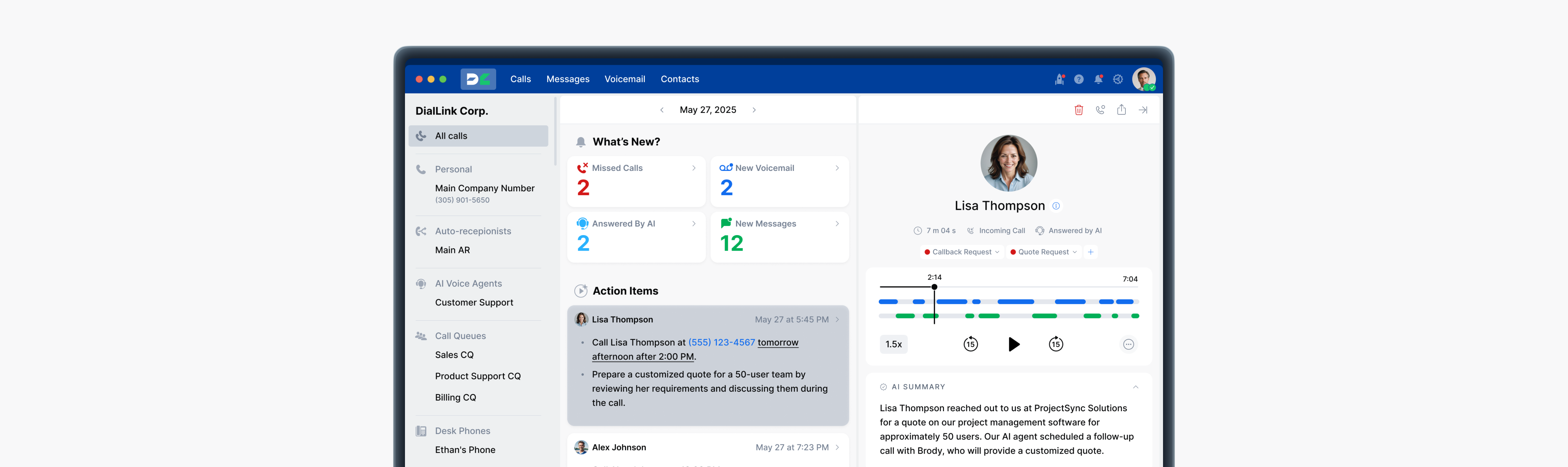
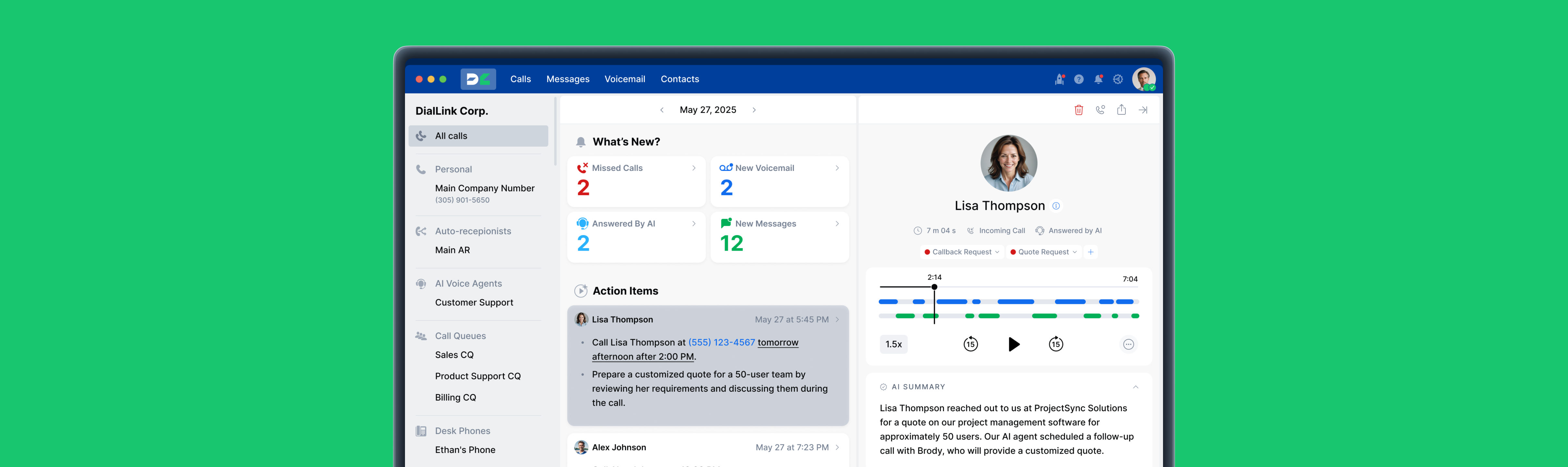
DialLink is a business phone system that brings calls, texts, voicemails, and AI call summaries into one unified workspace. Instead of relying on separate tools, your team can access AI-generated call summaries, action items, sentiment analysis, and call tags directly within each conversation.
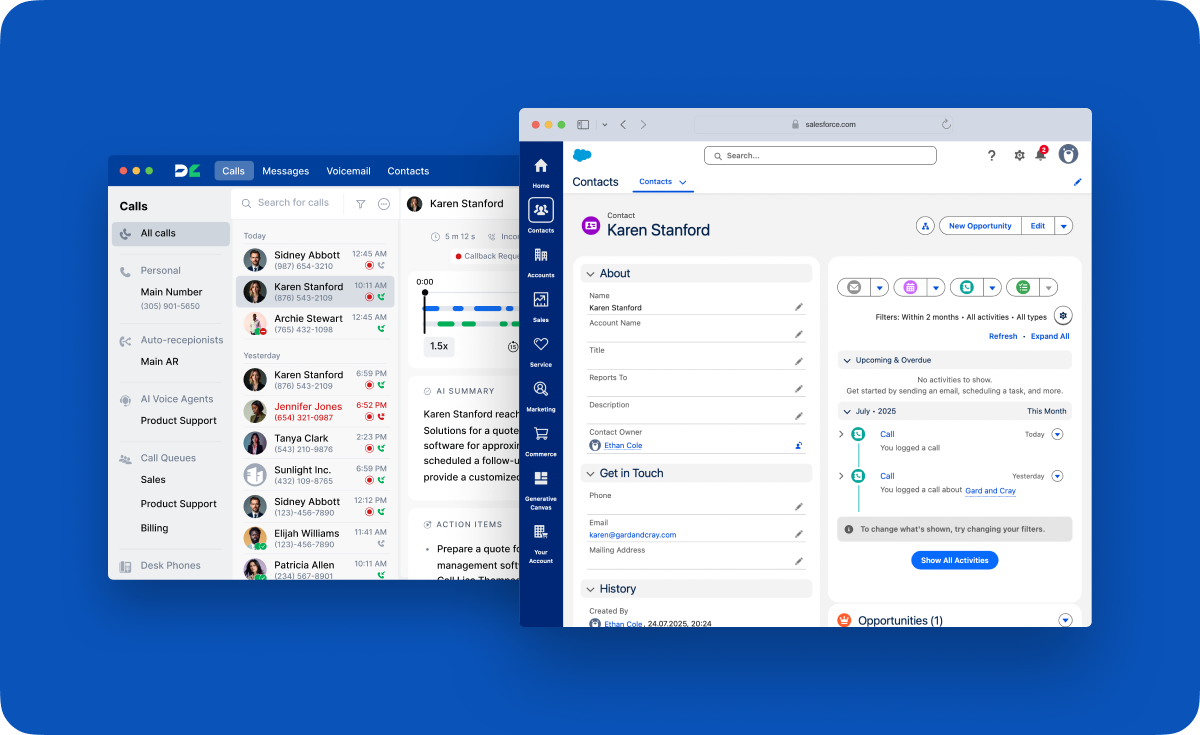
DialLink also offers native Salesforce integration, allowing AI-powered call summaries to automatically sync to the relevant Salesforce records. This ensures customer conversations, insights, and follow-ups are always available where your sales and support teams already work.
Because AI call summaries are built directly into the DialLink business phone system, there’s no need to spend time or money integrating additional tools. These feature are included in DialLink’s core plans, so you get advanced AI-powered call insights without add-ons, extra subscriptions, or hidden costs.
Ready to see AI call summaries in action? Try DialLink free for 7 days.
Yes, AI can automatically summarize sales calls and identify next steps. AI tools are trained to recognize common language patterns, such as commitments, follow-ups, objections, and timelines. This allows them to highlight agreed actions, like sending a proposal, scheduling a demo, or following up on a specific date.
For sales teams, this means every call can be turned into a clear summary with actionable next steps. It helps ensure nothing is missed and keeps follow-ups consistent across deals.
AI call summaries can be very accurate. This is true when speech recognition and language models are well trained and set up correctly.
Accuracy typically depends on factors such as call audio quality, speaker clarity, and the complexity of the conversation. While no system is perfect, most AI call summaries are accurate enough for everyday business use and significantly reduce the need for manual note-taking.
Most solutions offer some CRM integrations, but the availability and depth vary widely by provider.
Reputable providers often use encryption for data in transit and at rest. They restrict access with role-based permissions. They also follow standard security and compliance practices to support privacy rules.
Call transcription converts a conversation into text word for word and creates a complete record of everything that everyone said. AI call summaries go a step further by analyzing the conversation and condensing it into a short overview that highlights the most important points, key decisions, and next steps. In simple terms, transcription shows what was said, while AI call summaries focus on what matters.
Featured Tags
Share


Arina Khoziainova
Content Writer at DialLink
Arina is a content writer with over 7 years of experience in the IT industry. At DialLink, she creates clear, insightful content that helps small business and startup owners simplify communication and drive growth using modern tools. With a strong focus on practical value, Arina transforms complex topics into accessible, actionable stories.

Keep Reading

The Best AI Solutions for Virtual Receptionist Call Summaries (2026)
Explore the best AI call summary solutions for virtual receptionists. Compare their features and capabilities for small businesses and startups.
January 08, 2026
9 minutes

What Is Call Monitoring and Why Is It Important?
Learn what call monitoring is, how it works, and how call monitoring tools improve service quality and agent performance.
September 03, 2025
15 minutes

What Is a Call Log and Why Is It Essential for Small Businesses and Startups?
Learn what a call log is, the insights it provides to businesses, and how call log apps and software help you review call log history.
August 14, 2025
11 minutes

What’s New in DialLink: AI Call Tagging, Call Transfers and Knowledge Bases for AI Voice Agents
Explore what’s new in DialLink: AI call tagging, call transfers and knowledge bases for AI voice agents and more.
July 03, 2025
2 minutes
Benefits of a Cloud-Based Phone System for Small Businesses and Startups
Explore why a cloud-based phone system is the most beneficial and cost-effective choice for small businesses and startups compared to traditional phone systems.
June 23, 2025
9 minutes
Top 10 Best Medium-Sized Business Phone Systems in 2026
Compare the top business phone systems for medium-sized businesses to find a solution that fits your team’s size, budget, and growing communication needs.
October 21, 2026
25 minutes
Top 10 Best Business Phone Systems for Small Businesses in 2026
Compare the 10 best small business phone systems based on features, pricing, and ease of use to find the right fit for your business.
October 20, 2026
23 minutes

What's New in DialLink: AI Messaging Agents, Smarter AI Customization and More
See what's new in DialLink this month: AI messaging agents for SMS and WhatsApp, more control over AI agent settings, improved Salesforce integration and more.
September 22, 2026
5 minutes